Selecting the right bonding material is an important decision for manufacturers producing laminated products, composite materials, textiles, footwear components, and industrial assemblies. The adhesive layer directly influences product durability, flexibility, appearance, and manufacturing efficiency.
Many buyers focus mainly on adhesive strength when selecting bonding materials. However, bonding performance depends on multiple factors, including adhesive structure, substrate compatibility, activation conditions, and the requirements of the final product.
A material with strong adhesion may not always be the best choice if it reduces flexibility, affects appearance, or creates difficulties during production. Understanding how adhesive structures work helps manufacturers choose materials more effectively and avoid costly production adjustments.
Mesh film selection is the process of choosing an adhesive structure that matches the performance requirements of a specific manufacturing application.
In industrial production, adhesive materials do more than simply hold two layers together. They influence how products feel, bend, perform under stress, and maintain their appearance after processing.
For flexible products such as textiles, footwear components, and functional laminates, the bonding layer needs to provide reliable adhesion while preserving softness and movement. For structural applications, manufacturers may prioritize stronger fixation and higher dimensional stability.
Selecting an unsuitable adhesive structure may result in weak bonding, excessive stiffness, uneven adhesive distribution, or reduced product durability.
Therefore, manufacturers should evaluate adhesive materials according to the complete application rather than focusing only on adhesive strength values.
Mesh structure determines how adhesive is distributed across the bonding surface and affects the final characteristics of laminated products.
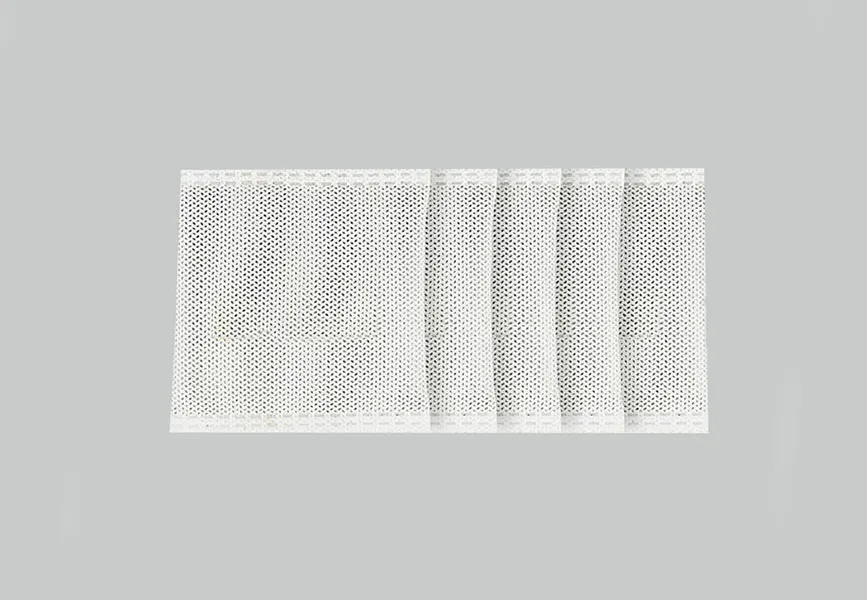
Unlike continuous adhesive films, mesh structures contain designed openings that control adhesive coverage. This structure allows manufacturers to achieve reliable bonding while maintaining flexibility, breathability, and reduced material weight.
The density and pattern of the mesh influence adhesive distribution. A more open structure may reduce adhesive coverage and improve flexibility, while a denser structure can provide greater bonding contact and stronger fixation.
When evaluating mesh film, manufacturers should consider how the adhesive pattern interacts with the substrate, production process, and final product performance. The structure itself is an important factor in determining whether the material can achieve consistent bonding results.

The correct mesh design depends on the product requirements. Materials used in flexible applications may require lightweight structures, while products exposed to repeated stress may need stronger adhesive coverage.
Mesh film and solid adhesive film are designed for different bonding requirements. The better choice depends on the product design, substrate characteristics, and manufacturing process.
| Comparison Factor | Mesh Film | Solid Adhesive Film |
|---|---|---|
| Adhesive coverage | Controlled through mesh pattern | Full surface coverage |
| Flexibility | Generally suitable for flexible products | Depends on thickness and formulation |
| Material breathability | Can maintain a more open structure | Usually lower permeability |
| Application control | Suitable for precise bonding requirements | Suitable for complete lamination |
Mesh structures are often preferred when manufacturers need controlled adhesive distribution and improved flexibility.
Solid adhesive films may be more suitable when complete surface coverage and stronger overall fixation are the main priorities.
For example, textile manufacturers may prefer bonding solutions that maintain fabric softness and movement, while industrial composite producers may focus more on maximum bonding strength and dimensional stability.
The right selection depends on the final product requirements rather than choosing one structure as universally superior.
Choosing the correct adhesive material requires understanding the relationship between the adhesive layer and the materials being bonded.
Different substrates have different surface characteristics. Fabrics, foam materials, plastics, leather, and composite structures may require different adhesive properties to achieve stable bonding.
Processing conditions are also important. The adhesive must activate at a suitable temperature while maintaining the integrity of the substrate. Excessive heat may damage sensitive materials, while insufficient activation may result in weak bonding performance.
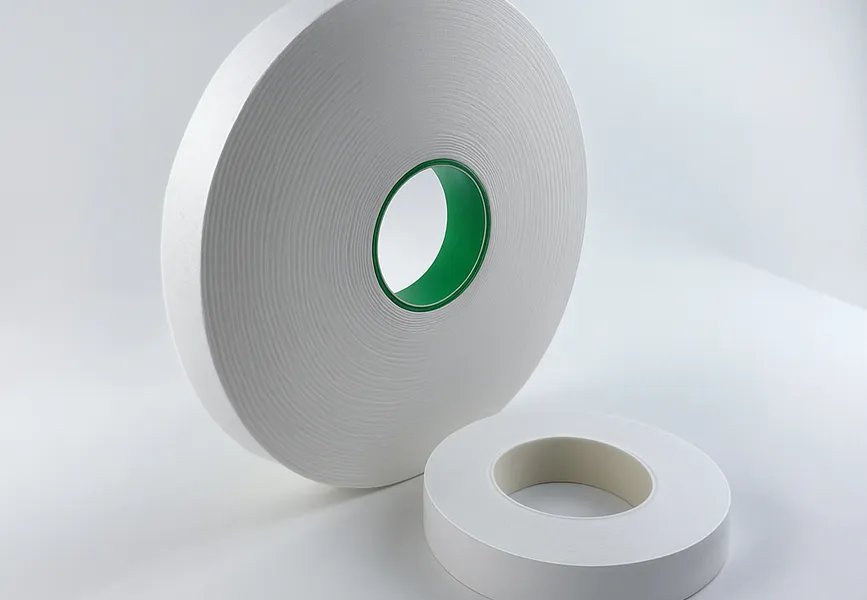
For heat-activated bonding applications, TPU hot melt adhesive film can provide advantages in flexibility, bonding performance, and compatibility with different substrates.
However, the most suitable material depends on the specific production process, required durability, and final product performance.

Manufacturers should test adhesive materials under realistic production conditions before large-scale manufacturing because laboratory results may not always represent actual assembly challenges.
Many bonding problems occur because manufacturers evaluate adhesive materials based on only one factor.
One common mistake is focusing only on price. Lower-cost materials may appear attractive initially but create additional expenses if they cause bonding failures, production delays, or inconsistent finished products.
Another mistake is ignoring substrate compatibility. An adhesive solution that works well for one material may not perform equally well with another because surface properties, flexibility, and processing requirements vary significantly.
Manufacturers should also consider production conditions. Activation temperature, pressure, heating time, and cooling processes all influence the final bonding result.
A better approach is to evaluate the complete application, including the substrate, equipment capability, environmental conditions, and expected product performance.
Customization allows manufacturers to adjust adhesive materials according to specific product requirements.
Standard adhesive materials may work well for common applications, but specialized products often require adjustments in adhesive properties, thickness, mesh structure, roll dimensions, or activation characteristics.
A customized solution can help manufacturers improve bonding stability while maintaining the desired product characteristics.
For industries requiring specialized laminated structures, combining adhesive solutions with materials such as medical non woven fabric can help achieve specific performance requirements related to protection, durability, and functional design.

A successful customization process usually begins with understanding the customer’s application requirements. Suppliers can then recommend suitable material options, provide samples, and support testing before final production approval.
A reliable adhesive material supplier should provide technical support in addition to standard products.
HmFiberTech develops functional nonwoven and adhesive material solutions for different industrial applications. By understanding customer requirements, the company supports material selection based on bonding performance, processing conditions, and final product expectations.
For manufacturers developing new laminated products, supplier cooperation can reduce testing time and improve production reliability.
Technical communication during the development stage helps ensure that the selected material matches both manufacturing requirements and final product goals.
The right bonding solution is not only determined by adhesive performance. It depends on the combination of material structure, application knowledge, and manufacturing experience.
Choosing the right mesh adhesive material requires careful consideration of structure design, bonding performance, substrate compatibility, and production conditions.
Mesh structures provide valuable advantages for applications requiring controlled adhesive distribution, flexibility, and lightweight construction. However, successful implementation depends on selecting the right material and validating performance through practical testing.
By understanding how adhesive structures influence product performance and working with an experienced supplier, manufacturers can improve bonding reliability and create more efficient production processes.
Mesh film is commonly used as an adhesive layer in laminated products where manufacturers require controlled bonding, flexibility, and lightweight performance.
Mesh film uses a structured adhesive pattern, while solid adhesive film provides continuous adhesive coverage. The suitable choice depends on product requirements and manufacturing conditions.
Bonding performance depends on mesh structure, adhesive formulation, substrate compatibility, activation temperature, pressure, and production conditions.
Yes. Manufacturers can adjust material structure, thickness, adhesive properties, and roll specifications according to customer requirements.
Buyers should test samples using actual substrates, production equipment, and processing conditions to confirm real manufacturing performance.
Mesh adhesive materials are used in textiles, footwear, automotive interiors, composite products, electronics, and other industrial applications.
Adhesive Bonding – Principles and Applications
https://en.wikipedia.org/wiki/Adhesive_bonding
Polyurethane – Properties and Industrial Applications
https://en.wikipedia.org/wiki/Polyurethane
Adhesion Society – Adhesion Science and Technology Resources
https://www.adhesionsociety.org/