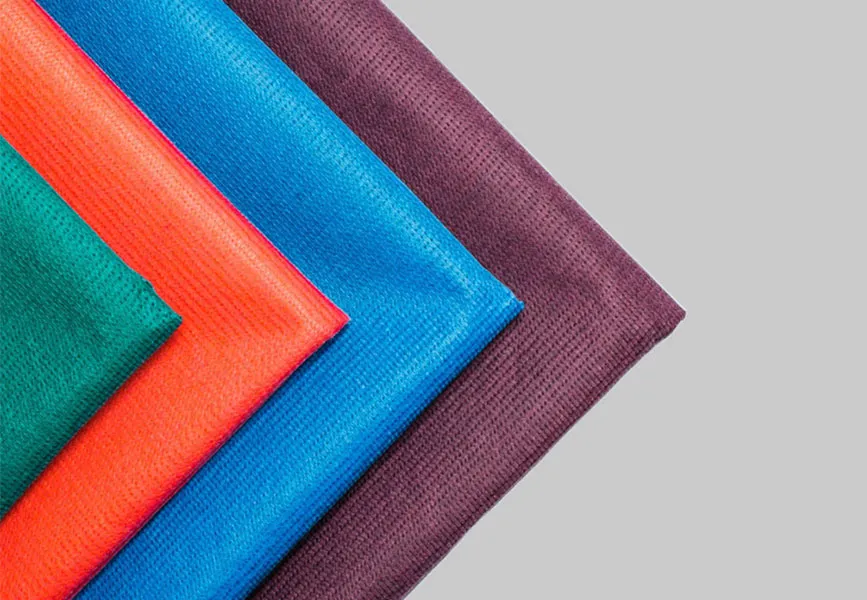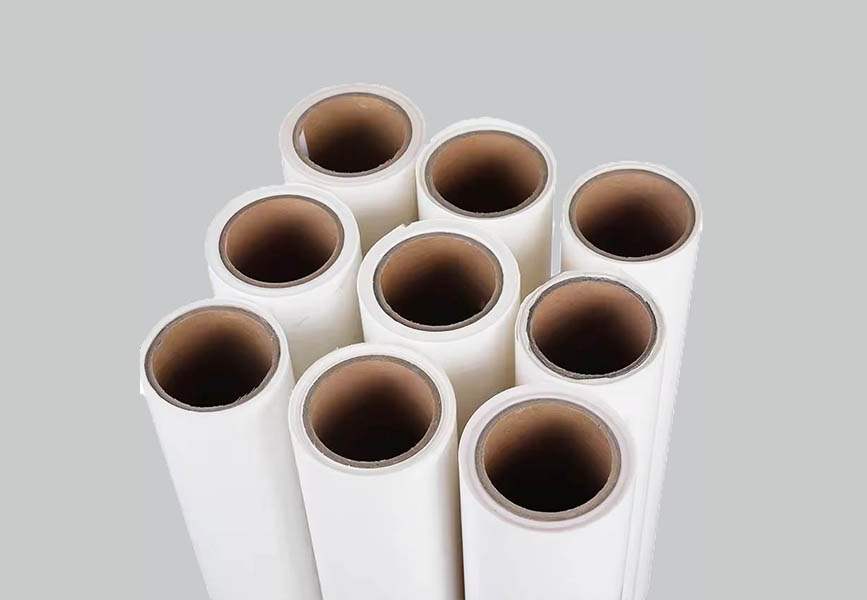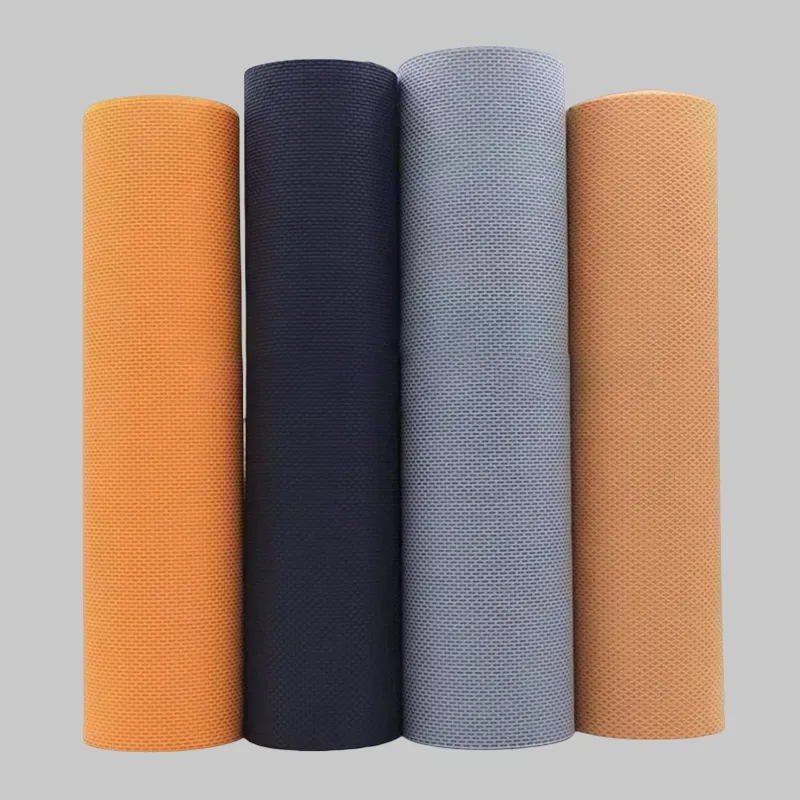
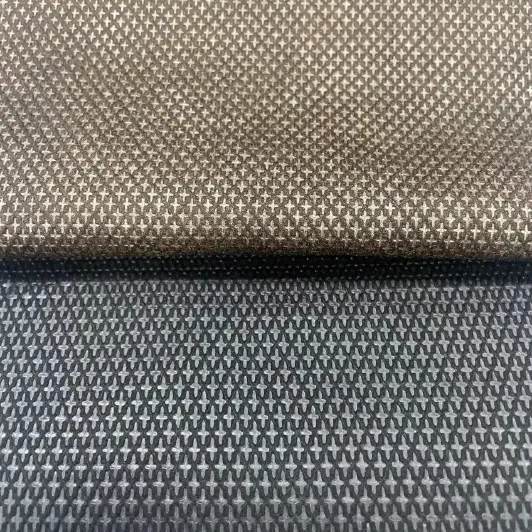
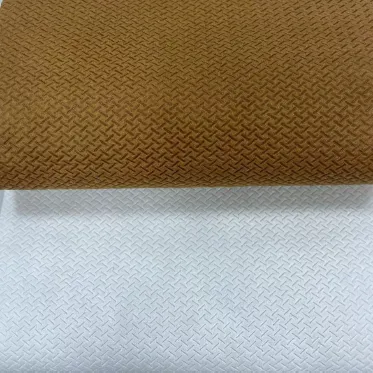
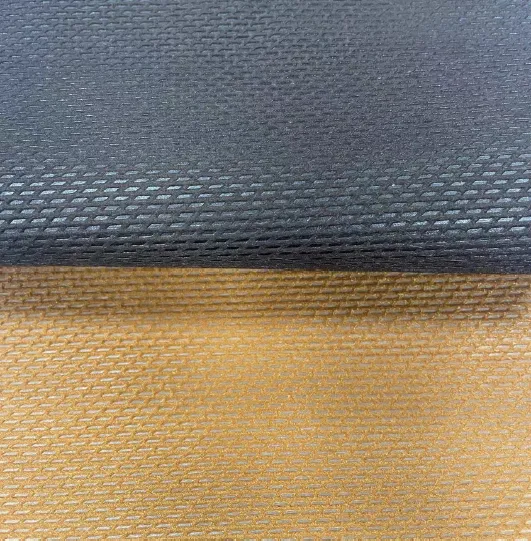
Canberra Nonwoven Fabric (Nylon Canberra) is a thermally bonded nonwoven material made from 100% polyamide (nylon) fibers. Produced via high-temperature calendering at around 220°C, this process fuses fibers into a robust yet flexible structure, retaining nylon’s inherent strength, abrasion resistance, and stability.
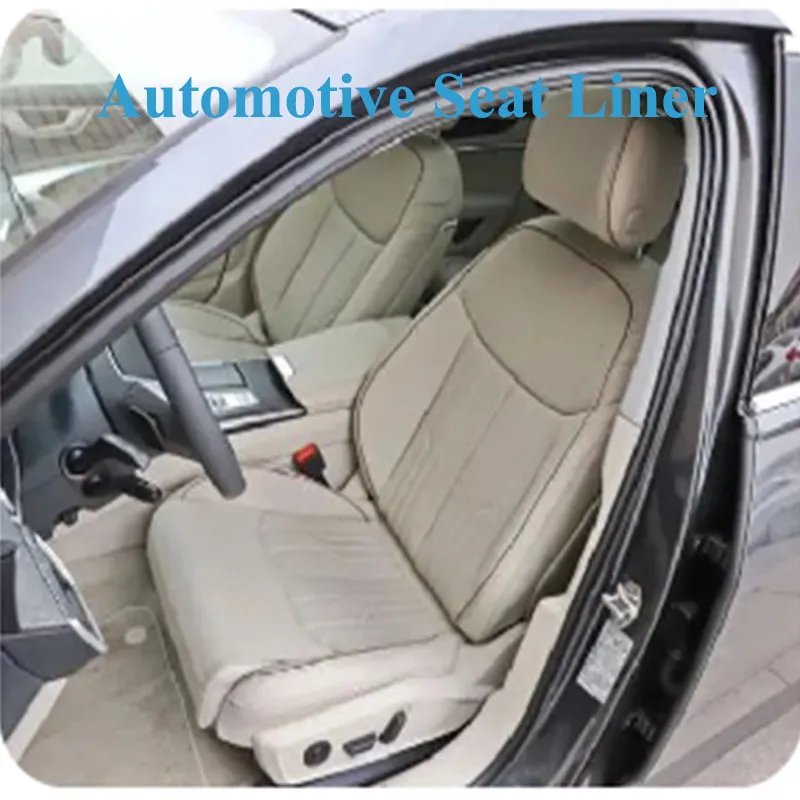
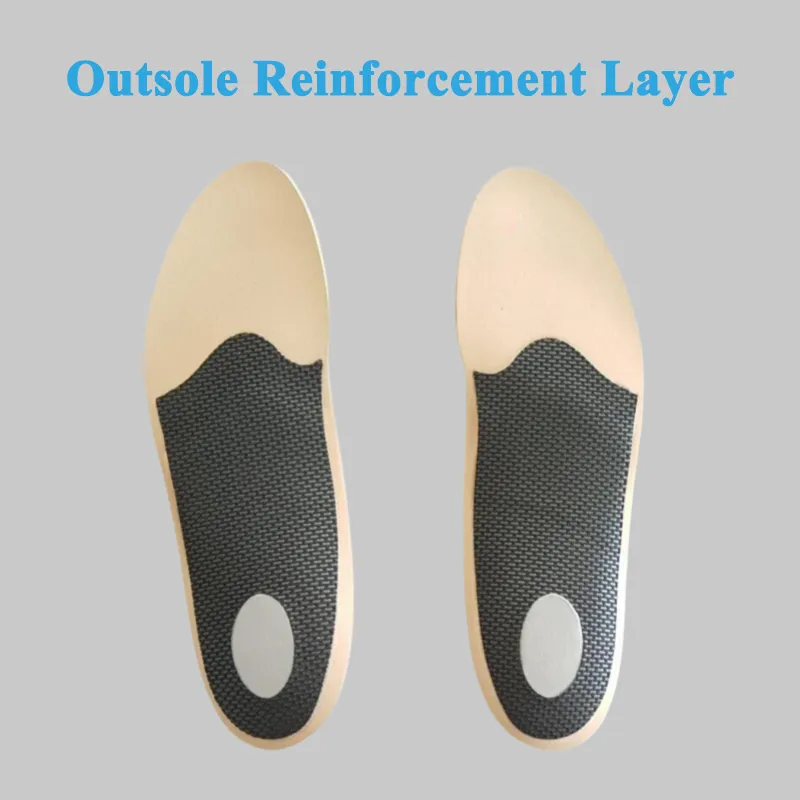
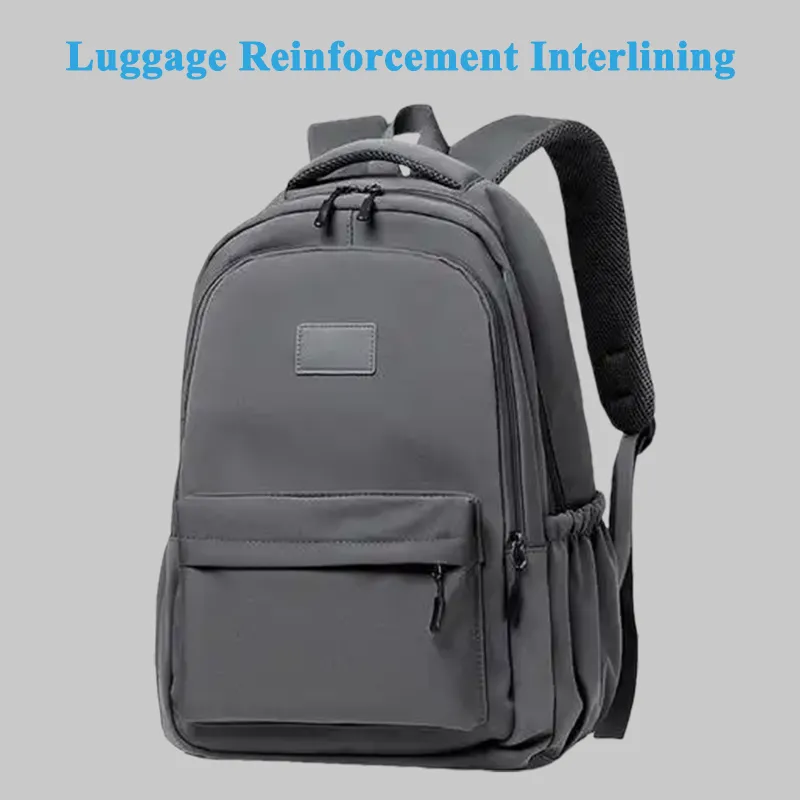
Its versatility spans multiple industries: in footwear, it reinforces uppers, linings, and insoles; in luggage, it strengthens handles and seams; in garments, it acts as supportive interlining for collars and cuffs. It also serves as an ideal substrate for artificial leather, ensuring durability and consistent quality across applications.
| Parameter Category | Specific Indicator | ||
| Base Material | 100% Polyamide (PA6/PA66) | ||
| Fiber Diameter | Fiber Fineness 1.5-3D,Fabric Width 38-51mm | ||
| Grammage Range | 120-250g/㎡(Standard Specification is 150-180g/㎡) | ||
| Thickness | 0.25-0.55mm(±0.03mm tolerance) | ||
| Width | Standard: 60 inches (1.52m), customizable up to 3.2m | ||
| Heat Press Temperature | 220-240℃(Instantaneous Heat Resistance 260℃) | ||
| Tensile Strength | Warp Direction≥85N/5cm,Weft Direction≥70N | ||
| Tear Strength | Elmendorf Method: Warp Tear Strength≥80N,Elmendorf Method: Weft Tear Strength≥70N | ||
| Abrasion Resistance | Martindale Abrasion ≥20,000 cycles | ||
| Air Permeability | 100-300L/m²/s( Varies with grammage and texture) | ||
| Moisture Absorption Rate | 4.2-4.8%(20℃/65%RH) | ||
| Color Fastness | Dry Rubbing≥4 level, Wet rubbing≥3 level | ||
| Performance Differences of Different Grammages | |||
| Grammage(g/㎡) | Recommended Use | Rotational Abrasion Resistance | Air Permeability |
| 120-140 | Sports Shoe Lightweight Lining/Smart Wearable Substrate Fabric | 15,000-18,000 | 250-300 |
| 150-180 | Safety Footwear Lining/Backpack Abrasion-Resistant Layer | 20,000-25,000 | 150-200 |
| 200-250 | Industrial Conveyor Belt Padding/Heavy Equipment Protective Cover | >30,000 | 80-120 |
| Texture Types and Mechanical Properties | |||
| Texture Types | Tensile Strength | Elongation at Break | |
| Plain Weave | 85/75 | 35-45 | |
| Cross Twill Weave | 95/85 | 25-35 | |
| Herringbone Weave | 80/70 | 40-50 | |
| Special Functional Parameters | |||
| Functional Requirements | Modification Parameters | ||
| Flame Retardant | Oxygen Index ≥28% (as per EN ISO 4589-2) | ||
| Antistatic | Surface Resistance 10⁶-10⁸ Ω (ESD Standard) | ||
| Antibacterial & Antifungal | Antibacterial Rate >99% (against Staphylococcus aureus) | ||
| High Resilience | Compression Set ≤15% (at 50% compression ratio) | ||
| Low-Temperature Flexibility(-40℃) | 5000 Bending Cycles without Cracking (ASTM D2136) | ||
Made from 100% polyamide (nylon) fibers, processed as a thermally bonded nonwoven material.
Manufactured via high-temperature calendering at approximately 220°C.
Exhibits abrasion resistance, making it suitable for durable applications.
Boasts versatility, enabling its use across multiple industries and diverse product types.
1. Footwear Applications: Nylon Canberra nonwoven is an optimal lining material for safety boots and outdoor footwear due to its abrasion resistance. It serves as reinforcement for toe puffs, heel counters, and canvas shoe insoles. Cross-grain Canberra variants function as premium shoe base cloth.
2. Luggage & Bags Sector: Widely utilized in handbag manufacturing and luggage lining, including garment bags, gift pouches, shopping totes, children’s sleeping bag liners, and document envelope interlinings.
3. Textile & Apparel Industry: Functions as garment interlining and synthetic leather substrate. Selected grades are engineered for intimate apparel and artificial suede (suedette) production.
4. Emerging & Niche Applications:
Marine: Experimental use in sailcloth composites
Industrial: Untapped potential for abrasion-resistant protective gear and outdoor equipment auxiliaries
Home & Technical Textiles: Home furnishing fabrics and storage/organizational textiles
Medical: Sterilizable grades for surgical gowns/masks (*subject to ISO 13485/EN 14683 compliance*)
Construction: Specialty building membranes