Activated carbon filter media use porous carbon to adsorb selected gas or liquid contaminants. In carbon-loaded nonwoven, carbon is combined with a fibrous carrier; in activated carbon fiber (ACF) felt, the activated fibers form the adsorption structure.
Huiming supplies ACF felt, related ACF cloth and composite filter media for air purification, odor control, VOC treatment and water-filtration development. Choose rolls, sheets or converted components to suit your filter design.
Discuss Your Filter Media Requirements
Material selection starts with the required adsorption function, available installation space and finished filter structure.
| Material | Structure and selection focus | Typical application |
| Activated carbon fiber felt | Needle-punched nonwoven ACF structure for an adsorption layer | Odor control, air filtration and VOC adsorption |
| Activated carbon fiber cloth | Thin ACF fabric for assemblies with limited space | Thin adsorption layers and composite filters |
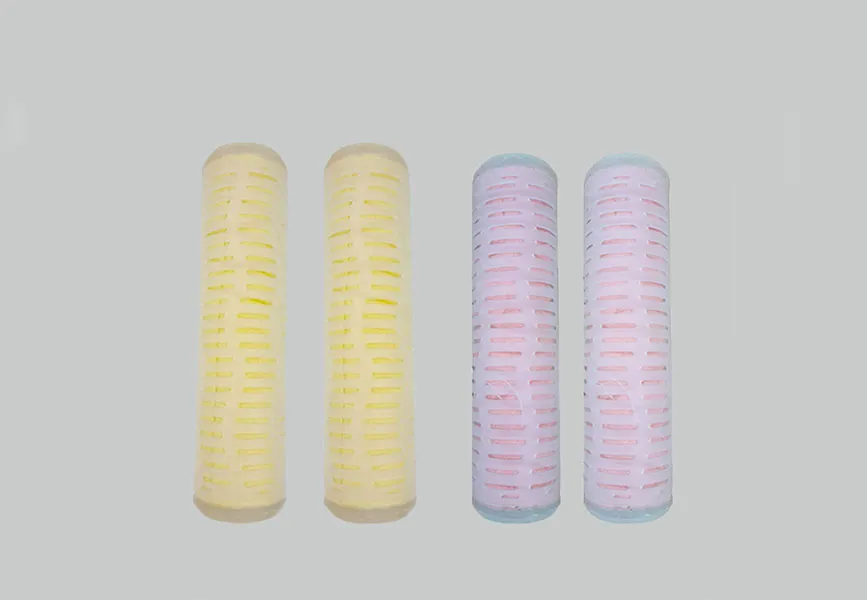
| ACF composite media | ACF combined with nonwoven, mesh or other supporting layers | Filter cartridges and custom converted components |
| Formaldehyde-removal ACF | Functional ACF grade developed for formaldehyde-focused applications | Cabin filters, HVAC and air-purifier development |
| Silver-loaded ACF | Functional ACF with silver loading for combined adsorption and antibacterial applications | Water-filter media and cartridge development |
The range includes both nonwoven felt and ACF cloth, allowing different material structures within a filter assembly. Composite construction can add support, handling strength or a facing layer for downstream converting.

ACF felt grades describe adsorption-related material characteristics using specific surface area and iodine adsorption value.
Huiming's activated carbon handbook lists the following grade references for activated carbon fiber felt.
| ACF felt grade | Specific surface area | Iodine adsorption value |
| A+ | ≥2,000 m²/g | ≥1,600 mg/g |
| A | ≥1,800 m²/g | ≥1,500 mg/g |
| B | ≥1,500 m²/g | ≥1,250 mg/g |
| C | ≥1,300 m²/g | ≥1,150 mg/g |
| D | ≥1,000 m²/g | ≥850 mg/g |
A and A+ grades are starting options for VOC and solvent-recovery applications. B to D grades serve odor control and general adsorption projects according to the required duty and cost target.
The handbook gives ACF felt production references of 20–1,000 g/m² basis weight and 0.1–1.5 m width. Select the grade, basis weight and finished construction together to suit the component.
Surface area and iodine value characterize the material. Filter performance also depends on the target contaminant, concentration, flow and contact time within the completed system.
A filtration duty is defined by the contaminant, flow conditions and required service period.
Use an adsorption layer to address selected gaseous contaminants and odors. For systems that need both gas and particle removal, combine the carbon layer with suitable air filtration media designed for particle capture.
High-surface-area ACF grades are available for VOC adsorption and solvent-recovery designs. Specify the solvent mixture, inlet concentration, flow and regeneration approach when selecting the material and filter structure.
ACF and silver-loaded ACF can be evaluated for custom cartridge designs. Select water filtration materials around the water chemistry, target contaminant, flow and contact time required by the application.
For any application, assess the completed filter under its intended operating conditions. Material grade, layer arrangement and available contact time work together to determine adsorption performance.
Custom converting turns the selected media into the layer, shape or component needed by your filter assembly.
| Requirement | Huiming supply options |
| Material specification | Basis weight, thickness, width, adsorption grade and composite structure |
| Converting | Slitting, laminating, sheet cutting and die cutting |
| Delivery format | Rolls, sheets, discs, strips, custom shapes and cartridge components |
| OEM presentation | Neutral or customer-branded packaging, marking and documentation |
Huiming supports custom filter media development from material selection through composite construction and converting. Sample rolls and die-cut samples are available for evaluation before tooling.
MOQ and delivery timing depend on grade, width and converting requirements. Standard grades may be supplied from available stock widths; custom specifications are quoted by project. Rolls are sealed in PE film on cores and packed in cartons, with pallet configuration arranged to suit handling requirements.
Available material test and safety documents support technical review of the selected material and application.
Share your target contaminant, air or water flow, allowable pressure drop, installation dimensions, preferred delivery format and order quantity. Huiming can recommend a material route and sample format for evaluation.
Activated carbon possesses a highly porous microstructure with a specific surface area ranging from 500–2000 m²/g, enabling rapid adsorption of small molecules, odorous compounds, and harmful gases. The nonwoven fabric's porous structure serves as a stable substrate, providing mechanical strength and breathability, while synergistically enhancing adsorption efficiency and durability.
High-Efficiency Adsorption: Demonstrates exceptional adsorption capacity for pollutants such as formaldehyde, benzene, sulfur dioxide, and odors, effectively purifying air and water.
Breathable & Durable: The nonwoven base ensures flexibility, air permeability, and resistance to deformation. Some products support regeneration for repeated use.
Safe & Eco-Friendly: Utilizes food-grade or medical-grade activated carbon with no harmful chemical residues. Complies with environmental standards for direct human-contact applications.
Customizable Design: Adjustable parameters include activated carbon content, fabric weight (GSM), and processing techniques to support different scenarios and provide flexible options for activated carbon fabric wholesale requirements.
Air Purification: home/commercial air purifier filters/Automotive AC filter elements/Indoor odor-eliminating sachets, rapid adsorption of formaldehyde, smoke, and odors.
Personal Protection: Activated carbon masks/Gas mask filter media/Blocks industrial exhaust, secondhand smoke, and hazardous gases to ensure respiratory safety.
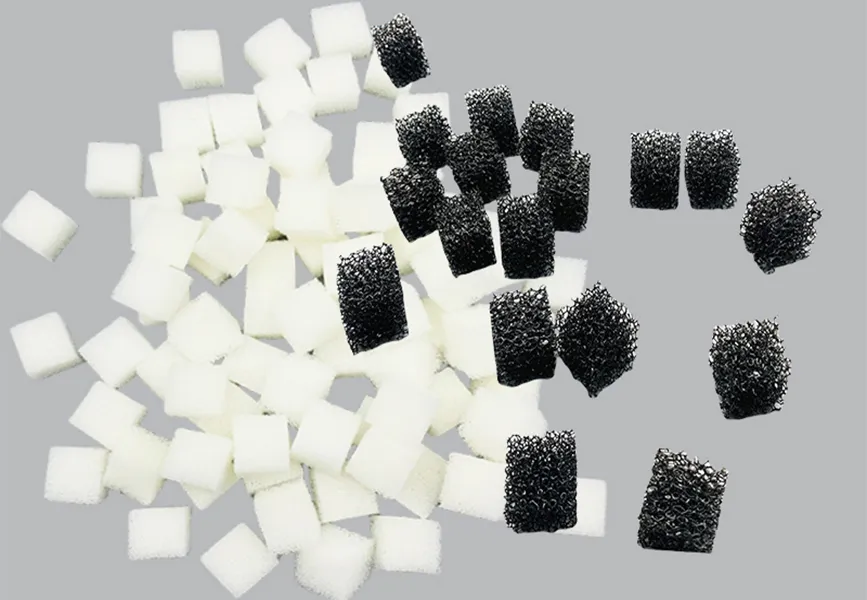
Water Treatment: Water purifier filter elements/Aquarium filter pads, removes residual chlorine, heavy metal ions, and organic pollutants from water.
Industrial Protection: Laboratory fume hood filtration materials/Industrial waste gas treatment system filters, prevents leakage of harmful chemical substances.
Consumer Products: Shoe deodorizing insoles/Refrigerator freshness odor absorbers/Pet pads, improves environmental odors through adsorption technology.
Advanced Manufacturing Process & Premium Raw Materials
Utilizing cutting-edge production technology and high-quality base materials, we provide reliable solutions as experienced activated carbon fabric suppliers for air purification, filtration, and protective applications.
Comprehensive & Rigorous Quality Control System
Implementing a complete and strictly enforced quality management framework.
State-of-the-Art Production Facilities with Strong Capacity Advantages
Equipped with advanced manufacturing equipment and significant production capacity.
Customer-Centric Approach with Full-Scale Professional Services
We maintain a client-focused philosophy, delivering comprehensive professional support.
Seamless Integration of Activated Carbon & High-Performance Nonwoven Fabric
Combining superior adsorption and filtration capabilities for optimal efficiency.

These answers explain common selection, converting and purchasing considerations for activated carbon media.
Use the required layer structure and installation space as a starting point. Felt provides a nonwoven adsorption structure, while cloth suits designs that call for a thin fabric layer.
Gas adsorption and particle capture perform different functions. A system that needs both should combine an adsorption layer with a suitable particle-filtering medium.
Huiming's handbook identifies A and A+ grades for VOC and solvent-recovery duty. Select the grade together with the solvent conditions, contact time and recovery-system design.
ACF can be thermally or steam regenerated in suitably designed industrial recovery systems. Consumer filter components are normally replaced, and the regeneration approach must suit the complete material structure.
Yes. Huiming supports slitting, lamination, sheet cutting and die cutting, with supply formats including discs, strips, custom shapes and cartridge components.
Sample rolls and die-cut samples are available for evaluation. MOQ depends on the selected grade, width and converting requirement.