Introduction
In the fast-growing nicotine pouch industry, manufacturers are under increasing pressure to improve both production efficiency and product consistency. While much attention is often placed on nicotine formulations and flavor systems, the importance of the pouch material itself is frequently underestimated.
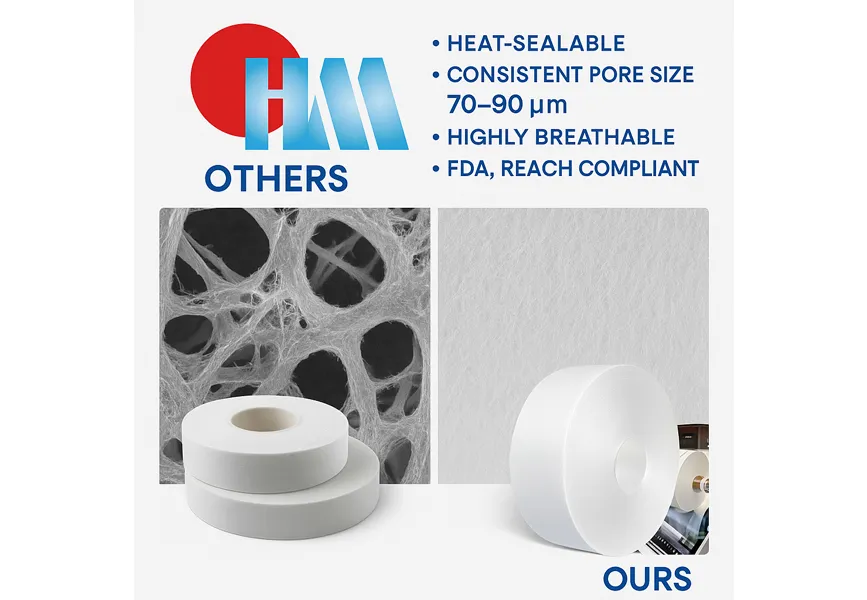
Huiming is a professional snus filter paper manufacturer in China, specializing in nicotine pouch nonwoven materials designed for stable sealing, low lint performance, and high-speed production compatibility.
In nicotine pouch manufacturing, the filter material is not just a packaging component—it directly determines sealing stability, production efficiency, and user experience.
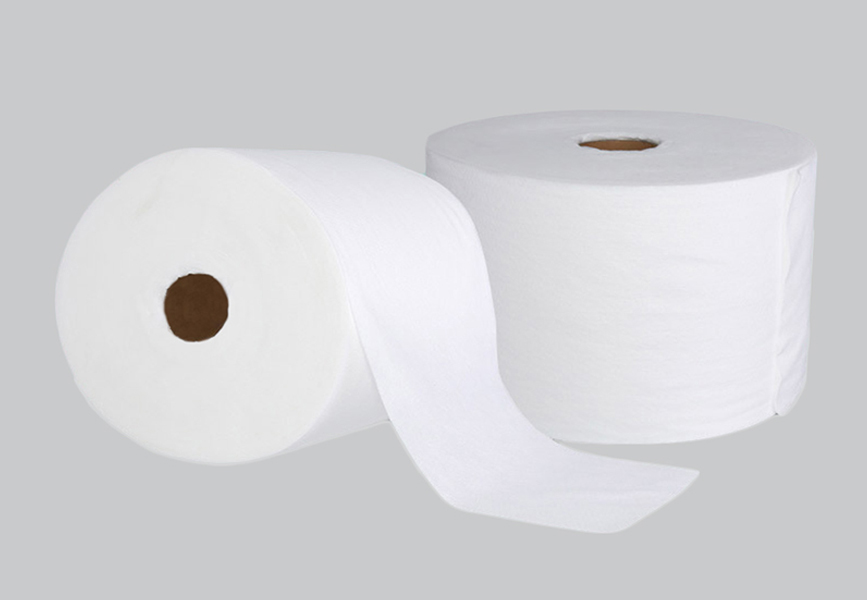
Snus filter paper is a food-grade nonwoven fabric used to contain nicotine or tobacco in pouch products.
A high-quality nicotine pouch nonwoven must provide:
Stable heat sealing performance
Controlled moisture transfer
Low fiber shedding (low lint)
Soft and comfortable mouthfeel
Compared with tea bag or coffee filter materials, pouch-grade nonwoven is specifically engineered for sealing performance and machine compatibility.
This guide explains how to choose the right pouch-grade nonwoven based on machine speed and production requirements, using Huiming’s HM-A, HM-01, and HM-XY as reference models.
At the center of pouch performance is the filter layer. Snus filter non-woven fabric is a food-grade material designed to ensure pouch integrity, controlled moisture transfer, and reliable sealing during high-speed packaging processes. This material directly influences how well a pouch performs during manufacturing and how it feels during use.
As production lines evolve from small-scale operations to fully automated high-speed systems, the requirements for filter materials also change. Choosing between HM-A, HM-01, and HM-XY is not simply a product decision—it is a strategic step toward optimizing your entire production process.
Snus pouch manufacturing involves continuous mechanical movement, heat sealing, and precise material feeding. Under these conditions, even small inconsistencies in fabric quality can lead to noticeable production issues.
Common problems caused by mismatched materials include:
Unstable sealing or pouch leakage
Fabric tearing during high-speed feeding
Irregular pouch shape or density
Rough texture that affects user comfort
To address these challenges, modern manufacturers increasingly rely on engineered materials such as meltblown nonwoven fabric, which offers better fiber uniformity and structural control. These materials allow more predictable performance across different machine speeds.
At the same time, selecting a consistent huiming non woven fabric helps reduce variability between batches, which is especially important for large-scale industrial production.
Choosing the right snus filter paper is essential for both production efficiency and product consistency.
Machine speed, usually measured in pouches per minute (PPM), is one of the most important factors when selecting a suitable nonwoven fabric.
| Machine Speed | Production Scenario | Main Requirement | Recommended Model |
| ≤50 PPM | Entry-level or small batch | Stability and ease of handling | HM-A |
| 50-150 PPM | Expanding production | Consistent sealing and feeding | HM-01 |
| ≥150 PPM | Industrial high-speed lines | Precision and low variability | HM-XY |
At higher speeds, the time available for sealing becomes shorter, and the material must respond quickly to heat and pressure. This places greater demands on fiber structure, bonding strength, and dimensional stability.
Higher machine speed requires better fiber uniformity, faster heat response, and stronger bonding stability.
According to the official product specifications, the three materials differ in several critical parameters that influence their real-world performance.
Product Comparison Table
| Feature | HM-A | HM-01 | HM-XY |
| Basis Weigh | 20–30 gsm | 25–35 gsm | 25–35 gsm |
| Fiber Structure | Standard nonwoven | High-consistency nonwoven | Ultra-fine fiber nonwoven |
| Web Formation | Conventional | Precision-controlled | Precision-controlled |
| Bonding System | Standard bonding | Enhanced bonding | High-stability bonding |
| Effective Pore Size | 80–100 µm | 70–90 µm | 70–90 µm |
| Machine Compatibility | Low–medium speed | Medium speed | High speed |
| Key Strength | Cost-effective | Stable performance | Premium consistency |
For most manufacturers, fabric selection can be simplified by focusing on actual production conditions rather than theoretical specifications.
For low-speed machines, stability and cost control are usually the primary concerns. HM-A is designed with a conventional structure that performs reliably under these conditions. It is easy to handle and does not require highly precise machine settings, making it suitable for smaller production environments.
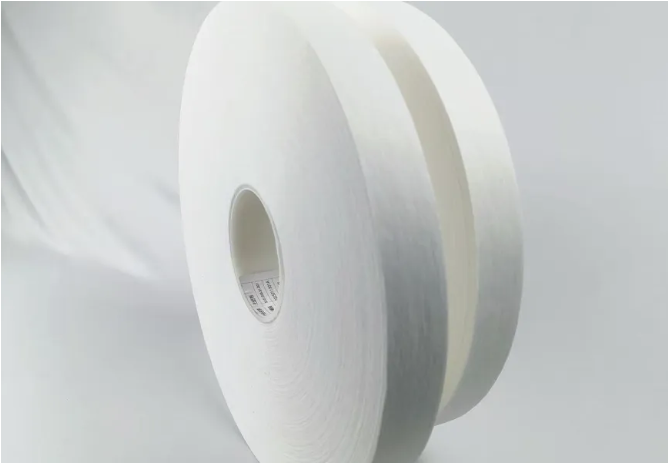
As production moves into the medium-speed range, consistency becomes more important. HM-01 improves fiber uniformity and bonding performance, helping maintain stable sealing during intermittent operations. This reduces variation between pouches and improves overall production efficiency.
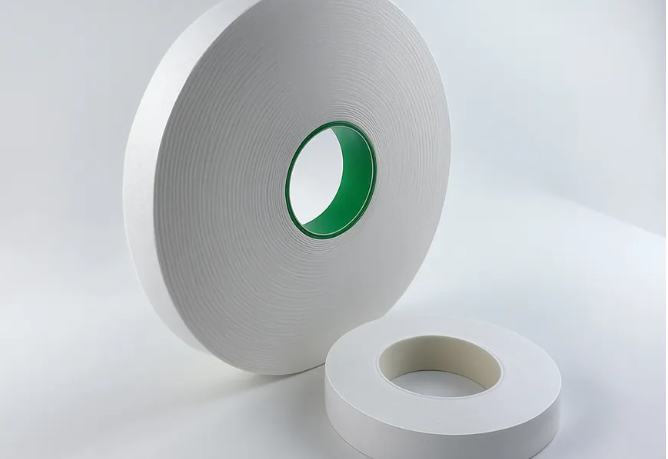
For high-speed continuous production, the requirements become much stricter. HM-XY is engineered with ultra-fine fibers and advanced formation processes to ensure uniformity at high throughput levels. This minimizes fiber shedding and helps maintain consistent sealing quality even under rapid operation.
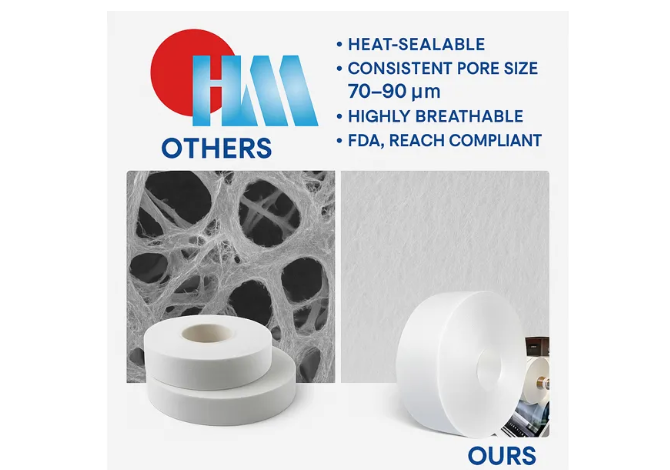
In simple terms:
HM-A → best for low-speed, cost-sensitive production
HM-01 → ideal for medium-speed, stable output
HM-XY → optimized for high-speed, high-quality manufacturing
Understanding a few core parameters can make fabric selection much easier.
A higher basis weight generally improves durability and sealing strength. This is why HM-01 and HM-XY are more suitable for faster production lines.
Finer fibers create a smoother surface and reduce shedding. This is especially important for both machine cleanliness and user comfort.
A controlled pore size helps regulate moisture and airflow, ensuring consistent nicotine release and product performance.
At higher speeds, the sealing window becomes shorter. Fabrics with enhanced bonding systems can maintain seal integrity even under reduced contact time.
Many suppliers use tea bag or coffee filter materials as substitutes.
However, these materials:
Lack sealing stability
Have higher fiber shedding
Are not optimized for pouch machines
Conclusion:
Pouch-grade nonwoven from a professional snus filter paper manufacturer provides significantly better performance.
Even experienced manufacturers can make avoidable mistakes when selecting materials. Some of the most common include:
Lower-cost materials may seem attractive initially, but they often lead to higher waste rates and machine downtime in the long run.
Using a low-speed fabric on a high-speed line can result in poor sealing and inconsistent output.
Fiber structure directly affects both production stability and end-user experience, yet it is often underestimated.
Skipping material testing under actual production conditions can lead to unexpected performance issues.
Avoiding these mistakes can significantly improve both production efficiency and product consistency.
What is snus filter paper?
Snus filter paper is a food-grade nonwoven material used to contain nicotine or tobacco in pouch products, ensuring durability, breathability, and safe oral use.
Pouch-grade nonwoven with low lint and stable sealing performance.
Yes, but it requires ultra-fine fiber materials like HM-XY.
Why does machine speed affect fabric choice?
Higher speeds reduce sealing time and increase mechanical stress, requiring materials with better bonding strength and structural consistency.
Can one fabric be used across all production lines?
While possible, it is not recommended. Matching the fabric to machine speed ensures better efficiency and fewer production issues.
What role does pore size play?
Pore size controls moisture transfer and airflow, which directly impacts flavor delivery and user experience.
Selecting the right snus filter nonwoven fabric is key to achieving efficient production and consistent product quality. By aligning HM-A, HM-01, or HM-XY with machine speed and operational needs, manufacturers can reduce waste, improve sealing performance, and deliver a better pouch experience to the market.
1. Wikipedia – Nonwoven Fabric
https://en.wikipedia.org/wiki/Nonwoven_fabric
2. Wikipedia – Snus
https://en.wikipedia.org/wiki/Snus
3. ScienceDirect – Nonwoven Fabrics Overview
https://www.sciencedirect.com/topics/engineering/nonwoven-fabrics