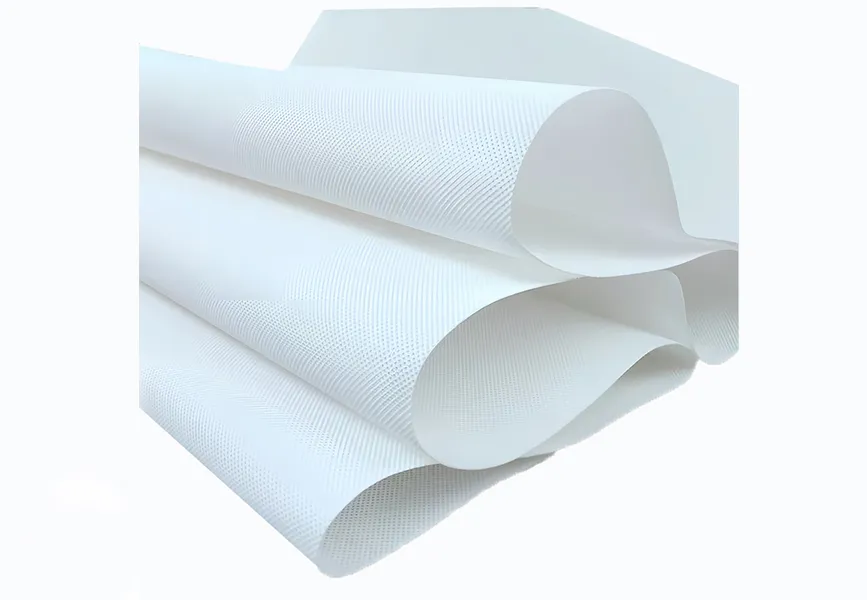
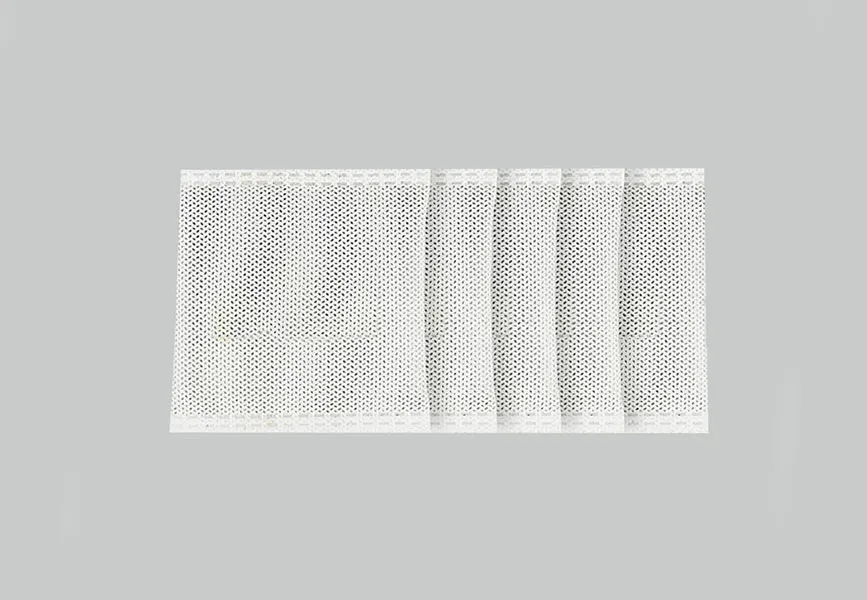
Nonwoven materials are widely used in filtration, wipes, hygiene products, medical textiles, packaging, industrial components, and consumer goods. However, not every nonwoven fabric is made from the same fiber, and different fibers create very different performance results. Polyester nonwoven fabric and viscose nonwoven are two common material choices, but they are usually selected for different reasons.
Polyester nonwoven fabric is often valued for dimensional stability, strength, durability, heat resistance, and industrial adaptability. Viscose nonwoven fabric is usually selected when softness, absorbency, skin comfort, and moisture interaction are more important. For B2B buyers, the key question is not simply "which fabric is better", but which fabric fits the product's final application, conversion method, and performance target.
When buyers ask "what is non woven polyester fabric", "is polyester a non woven fabric", "what are non woven fabrics made of", "what fabric is non woven", or "what is GSM in non woven fabric", they are usually trying to understand how raw material, structure, and weight affect real product performance. This article explains the differences between polyester nonwoven and viscose nonwoven so buyers can make better material decisions for filtration, wipes, packaging, medical, and industrial applications.
What is non woven polyester fabric: It is a nonwoven fabric made from polyester fibers or filaments that are bonded into a web without weaving or knitting.
Is polyester a non woven fabric: Polyester itself is a fiber or polymer raw material, not a fabric structure. It becomes nonwoven fabric when polyester fibers are formed into a web and bonded.
What are non woven fabrics made of: Nonwoven fabrics can be made from synthetic fibers, natural fibers, regenerated cellulose fibers, bio-based fibers, or fiber blends.
What fabric is non woven: A nonwoven fabric is a sheet or web structure made directly from fibers or filaments, bonded mechanically, thermally, or chemically rather than woven with yarns.
What is GSM in non woven fabric: GSM means grams per square meter. It describes fabric weight and affects thickness, strength, absorbency, filtration behavior, and cost.
Non woven polyester fabric is a sheet or web material made from polyester fibers or filaments that are bonded together without weaving or knitting. Polyester is commonly used because it provides good strength, dimensional stability, abrasion resistance, thermal stability, and durability. These properties make it suitable for applications where the fabric must keep its shape, support downstream processing, or resist mechanical stress.
The structure of polyester nonwoven fabric depends on the production method. It may be made through processes such as spunbonding, needle punching, thermal bonding, chemical bonding, or other nonwoven manufacturing methods. The final material can be soft and flexible, firm and stable, thin and lightweight, or thick and strong depending on fiber size, web formation, bonding method, GSM, and finishing.
This is different from woven polyester fabric. Woven polyester is made by interlacing yarns. Polyester nonwoven fabric is formed directly from fibers or filaments. In a broader technical definition, nonwovens are often described as engineered fibrous assemblies with designed structural integrity, excluding traditional weaving and knitting.
In real applications, polyester nonwoven fabric is often selected when the product needs durability rather than high liquid absorption. It can be used in filtration support layers, industrial liners, reinforcement materials, packaging substrates, furniture components, automotive materials, construction materials, protective covers, and technical textiles. It may also be used in composite structures where strength and stability are required.
A common misunderstanding is the question "is polyester a non woven fabric?" Polyester is not automatically nonwoven. Polyester is a raw material. It can be used to make woven fabric, knitted fabric, nonwoven fabric, films, fibers, or other polymer-based materials. It becomes nonwoven polyester fabric only when polyester fibers or filaments are formed into a web and bonded into a fabric-like sheet.
For buyers, this distinction is important. A product specification should not only say "polyester". It should define whether the material is woven, knitted, spunbond nonwoven, needle-punched nonwoven, chemically bonded nonwoven, or a composite nonwoven. The fabric structure will strongly influence strength, softness, air permeability, thickness, and processing behavior.
Non woven fabrics can be made from many types of fibers. The most common materials include polypropylene, polyester, viscose, cotton, wood pulp, nylon, polyethylene, PLA, Tencel-type fibers, and specialty functional fibers. The material choice depends on the required performance.
Synthetic fibers such as polyester and polypropylene are often chosen for strength, stability, processability, and cost control. Polyester offers better dimensional stability and higher temperature resistance than many common polypropylene grades. Polypropylene is lightweight and widely used in spunbond and meltblown materials, especially for hygiene, medical, and filtration applications.
Regenerated cellulose fibers such as viscose are made from cellulose-based raw materials. Viscose nonwoven fabric is known for softness, moisture absorption, breathability, and skin-friendly performance. This makes viscose nonwoven suitable for wet wipes, hygiene products, facial masks, medical dressings, absorbent pads, and direct skin-contact applications.
Natural fibers such as cotton may be used when a soft, absorbent, and natural hand feel is needed. Wood pulp is often used in airlaid and wetlaid materials for absorbent products and wipes. Bio-based fibers such as PLA may be selected when sustainability, compostability potential, or lower fossil-based material content is part of the product strategy.
Nonwoven fabrics can also be made from fiber blends. Blending helps combine different strengths. For example, viscose and polyester may be combined to improve both absorbency and strength. Polyester can provide dimensional stability, while viscose improves softness and liquid handling. A composite structure may include one layer for strength, one layer for filtration, and another layer for comfort or absorbency.
So when buyers ask "what fabric is non woven", the answer is not one specific fiber. Nonwoven refers to the fabric structure and manufacturing method, not a single raw material. Polyester, viscose, polypropylene, cotton, and other fibers can all become nonwoven fabrics if they are formed into a web and bonded without weaving or knitting.
Polyester nonwoven and viscose nonwoven can both be used in B2B applications, but their performance profiles are different. The best choice depends on whether the final product needs strength, absorbency, softness, stability, breathability, or liquid management.
Polyester nonwoven fabric is usually stronger and more dimensionally stable. It is less absorbent than viscose, but it performs well in applications where the material must hold shape, resist tearing, support filtration layers, or withstand mechanical processing. It can be a good option for filter supports, industrial materials, packaging, backing layers, reinforcement fabrics, and durable technical products.
Viscose nonwoven fabric is usually softer and more absorbent. It is well suited for skin-contact and liquid-handling products. It can absorb water-based liquids more easily than hydrophobic synthetic fabrics. This makes it useful for wet wipes, cosmetic facial masks, medical pads, absorbent layers, hygiene products, and cleaning materials.
The following comparison gives a practical overview:
Comparison Item | Polyester Nonwoven Fabric | Viscose Nonwoven Fabric |
Main raw material | Polyester fiber or filament | Regenerated cellulose fiber |
Main advantage | Strength, stability, durability | Softness, absorbency, skin comfort |
Moisture absorption | Generally low to moderate | Generally high |
Breathability | Depends on structure and GSM | Often good, depending on structure |
Skin-contact comfort | Can be improved by finishing | Naturally soft and comfortable |
Heat resistance | Generally better than viscose | Lower heat stability than polyester |
Wet use | Stronger when engineered properly | Good absorption, wet strength depends on bonding |
Common uses | Filtration support, packaging, industrial fabrics | Wipes, medical pads, beauty care, hygiene products |
Best-fit products | Durable and structural applications | Absorbent and skin-contact applications |
For filtration, polyester nonwoven may be used as a support or backing layer because it provides strength and dimensional stability. For fine filtration, it may be combined with meltblown or other functional media. When a product needs high-efficiency filtration rather than basic support, working with a meltblown nonwoven fabric factory may be more suitable.
For wipes and beauty care products, viscose nonwoven is often more comfortable because it can hold and distribute liquid. It can provide a soft hand feel and better moisture interaction. For medical dressings and absorbent products, viscose can help improve comfort and liquid handling, while polyester or other fibers may be added if more strength is needed.
For industrial and packaging materials, polyester is often the stronger option. It can help maintain shape, resist deformation, and support repeated handling. Viscose may still be useful in packaging or protective products when absorbency or softness is required, but it is not always the first choice for high-strength industrial use.
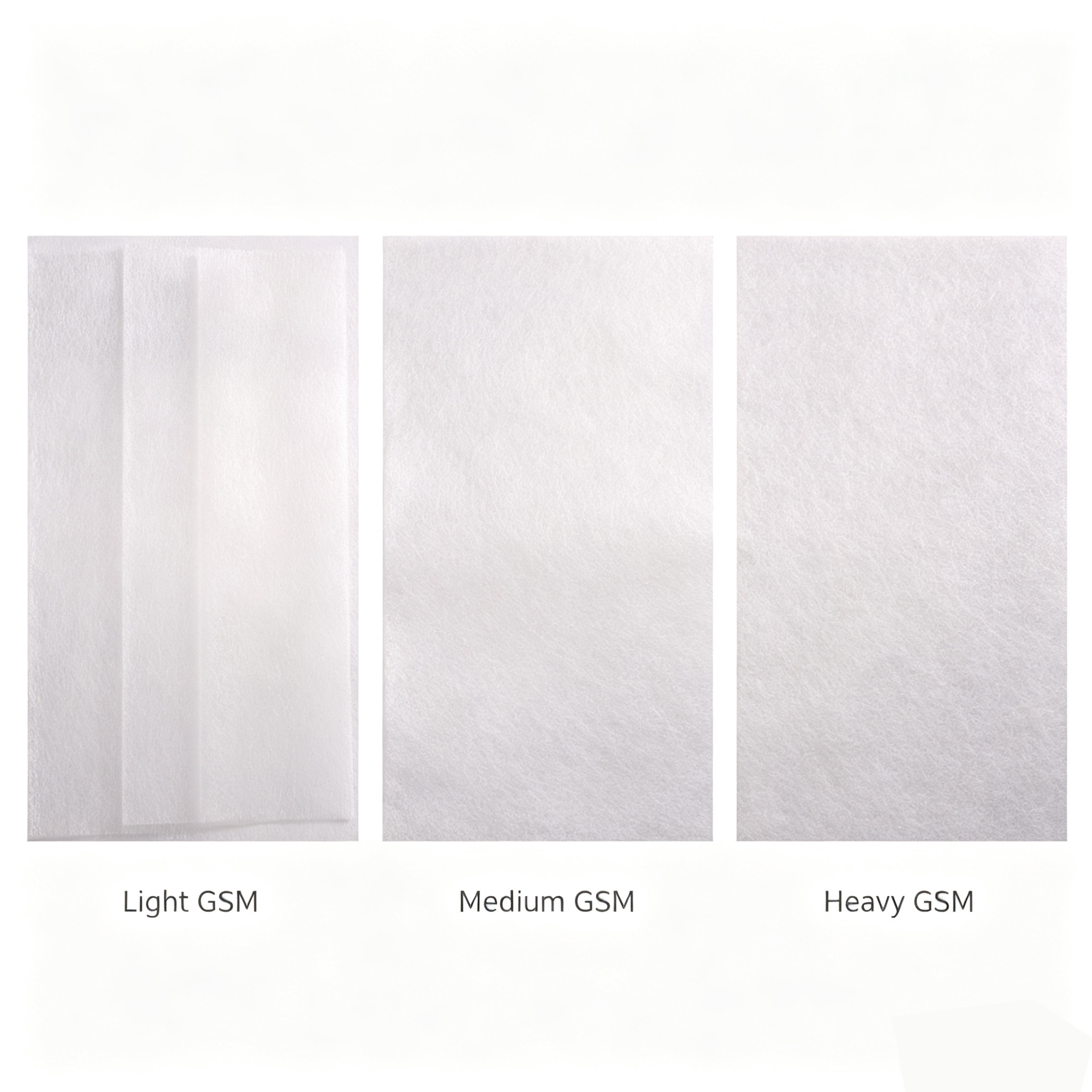
GSM means grams per square meter. It is a common measurement used to describe the weight of fabric. In nonwoven materials, GSM affects thickness, strength, absorbency, softness, opacity, filtration behavior, cost, and processing stability.
A higher GSM usually means more fiber mass in each square meter of material. This may improve strength, liquid capacity, durability, or barrier performance. However, higher GSM may also increase cost, reduce breathability, make the material stiffer, or affect folding and converting. A lower GSM may be softer, lighter, more breathable, and more cost-efficient, but it may not provide enough strength or absorbency for demanding applications.
For polyester nonwoven fabric, GSM is often linked to mechanical strength, support performance, stiffness, and durability. A heavier polyester nonwoven may be useful for industrial reinforcement, filtration backing, packaging support, or protective layers. A lighter polyester nonwoven may be used for liners, interlayers, covers, or disposable products.
For viscose nonwoven fabric, GSM often affects absorbency, wet strength, softness, and liquid retention. A higher GSM may hold more liquid and feel more substantial, which is useful for wet wipes, facial masks, and absorbent pads. A lower GSM may be suitable for lightweight disposable products, but it may tear more easily when wet unless the bonding method is optimized.
GSM should not be used alone to judge fabric quality. Two fabrics with the same GSM can perform very differently if they use different fibers, bonding methods, thickness, pore structures, or finishing treatments. A 50 GSM polyester nonwoven and a 50 GSM viscose nonwoven may feel, absorb, and process very differently.
For procurement, GSM should be evaluated together with:
Fiber type
Fabric thickness
Tensile strength
Elongation
Absorbency
Air permeability
Softness
Wet strength
Linting level
Surface finish
Roll width and winding quality
Conversion method
A good material selection process should begin with the final application and then match GSM to the product's performance target. Choosing only by GSM can lead to the wrong material, especially when comparing polyester and viscose nonwovens.
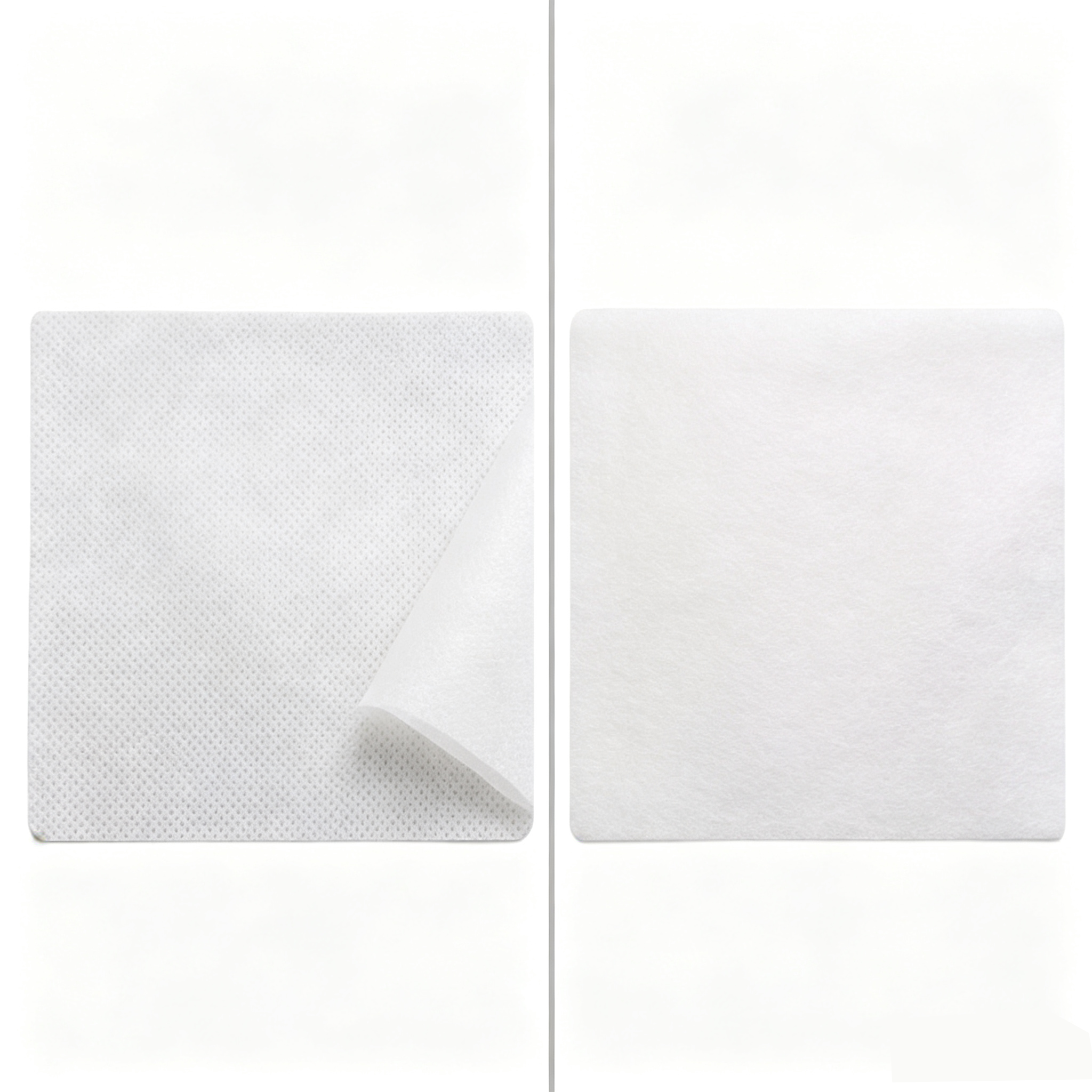
The best fabric depends on the final use. Polyester nonwoven and viscose nonwoven are not direct replacements in every application. Each has a better-fit area.
For filtration, polyester nonwoven is often suitable as a support layer, backing layer, or structural layer. It can help the filtration media maintain shape and resist deformation during pleating, cutting, or assembly. However, if the product requires fine particle capture, odor control, or liquid filtration, other functional layers may be needed. Meltblown, activated carbon, or composite nonwoven structures may be added depending on the filtration target.
For wet wipes, facial masks, and beauty care products, viscose nonwoven is often a stronger choice because it provides softness and liquid interaction. It can absorb and hold water-based liquids, making it suitable for products that contact skin or need wet handling performance. If the wipe needs more durability, viscose may be blended with polyester to improve strength.
For medical and hygiene applications, the decision depends on skin contact, liquid management, cleanliness, and strength. Viscose may be suitable for absorbent and skin-contact layers. Polyester may be suitable for backing, reinforcement, or structural support. In some cases, a blend or composite structure is better than one fiber alone.
For packaging, polyester nonwoven is often suitable when strength, dimensional stability, and durability are required. It may be used in protective wrapping, reusable packaging, interlining, industrial bags, product protection, and specialty packaging layers. Viscose may be used when softness, absorbency, or surface comfort is more important.
For industrial applications, polyester nonwoven usually has an advantage because of its durability and stability. It can be used in automotive materials, construction materials, filtration supports, furniture components, insulation layers, protective covers, and technical fabrics. Viscose may be used in industrial wipes or absorbent materials when liquid handling is the priority.
For companies comparing huiming non woven fabric, the better approach is to start with the end-use requirement and then select the right fiber, bonding method, GSM, and finishing process. Standard fabric may be enough for simple applications, while customized composite nonwoven may be better for products that require a balance of strength, absorbency, breathability, and conversion performance.
A practical selection guide:
Choose polyester nonwoven when strength, stability, durability, and industrial processing are priorities.
Choose viscose nonwoven when softness, absorbency, skin comfort, and liquid handling are priorities.
Choose polyester-viscose blends when both strength and absorbency are needed.
Choose meltblown or composite nonwoven when filtration efficiency is a key requirement.
Choose customized nonwoven structures when standard materials cannot meet the final product's performance needs.
Nonwoven polyester fabric and viscose nonwoven fabric both belong to the nonwoven material family, but they serve different application needs. Polyester nonwoven fabric is usually stronger, more stable, and better suited for industrial, filtration support, packaging, and structural applications. Viscose nonwoven fabric is usually softer, more absorbent, and better suited for wipes, beauty care, hygiene, medical pads, and skin-contact products.
For buyers asking "what is non woven polyester fabric", the answer is a bonded web made from polyester fibers or filaments. For the question "is polyester a non woven fabric", the answer is no: polyester is a raw material that can be made into different fabric structures, including nonwoven fabric. For the question "what are non woven fabrics made of", the answer depends on fiber selection, bonding method, and end-use requirements.
GSM is important, but it should never be the only selection factor. The right material should be chosen by application, required strength, absorbency, softness, breathability, liquid handling, filtration target, and conversion process. For B2B buyers, matching the fabric to the final product is the most reliable way to reduce development risk and improve product performance.
https://www.inda.org/about-nonwovens/
https://www.edana.org/nw-related-industry/what-are-nonwovens
https://www.edana.org/nw-related-industry/how-are-nonwovens-made