Activated carbon nonwoven fabric is a functional material designed for applications where ordinary fabric support is not enough. It combines the flexible, breathable, and processable structure of nonwoven fabric with the adsorption capability of activated carbon. This makes it useful in air filtration, odor control, personal protection, water treatment, industrial filtration, and consumer products that need both material stability and functional performance.
For buyers, the key questions are often practical: what is a non woven filter fabric, does non woven fabric filter particles and gases, does non woven fabric absorb moisture or odor, and where are non woven fabrics used in real products? The answer depends on the fabric structure, activated carbon content, base material, GSM, airflow resistance, adsorption target, and final product design.
Compared with standard nonwoven materials, activated carbon nonwoven fabric is selected when the product needs to reduce odors, adsorb certain gases, improve air quality, or add a functional layer to a filtration system. It can be supplied as roll goods, sheets, filter media, mask-related materials, deodorizing media, or customized composite structures. For companies sourcing activated carbon fabric wholesale, the most important task is to match the fabric specification with the application instead of choosing only by color, thickness, or price.
● What is a non woven filter fabric: It is a nonwoven material designed to capture, separate, adsorb, or control particles, gases, odors, or contaminants in air or liquid systems.
● Does non woven fabric filter: Yes, selected nonwoven fabrics can filter particles, support filtration layers, or act as carrier materials for functional media such as activated carbon.
● Does non woven fabric absorb moisture: Some nonwoven fabrics can absorb or manage moisture depending on fiber type, treatment, and structure, while activated carbon nonwoven fabric is mainly valued for odor and gas adsorption.
● What are non woven fabrics used for: They are used in filtration, medical textiles, hygiene products, packaging, apparel components, industrial materials, wipes, absorbent products, and functional composites.
● Where are non woven fabrics used: In air purifiers, HVAC filters, automotive filters, protective masks, deodorizing products, water filters, industrial filtration systems, consumer goods, and healthcare-related products.
Activated carbon nonwoven fabric is a composite material made by combining activated carbon with a nonwoven fabric substrate. The activated carbon may be attached, embedded, laminated, or integrated into the fiber structure depending on the production method and application requirement. The nonwoven layer provides flexibility, breathability, mechanical support, and processability, while the activated carbon contributes adsorption performance.
Activated carbon is known for its highly porous internal structure. These pores create a large surface area that can capture certain odor molecules, volatile organic compounds, and gaseous pollutants through adsorption. Adsorption is different from absorption. Absorption means a substance enters into the bulk of another material, like water entering a sponge. Adsorption means molecules attach to the surface or pores of a material. For odor control and gas-phase filtration, adsorption is the more accurate term.
The nonwoven base is equally important. It allows the material to be converted into filter pads, sheets, inserts, masks, sachets, or laminated structures. It also helps control airflow, thickness, softness, strength, and handling performance during production. A good activated carbon nonwoven fabric should not shed excessive carbon particles, deform easily, or block airflow too much.
In many B2B applications, activated carbon non woven fabric is used when a product needs both filtration media support and odor-control performance. Typical examples include air purifier filters, automotive cabin filters, deodorizing inserts, protective mask layers, water filter pads, refrigerator odor absorbers, shoe deodorizing materials, and industrial exhaust filtration media.
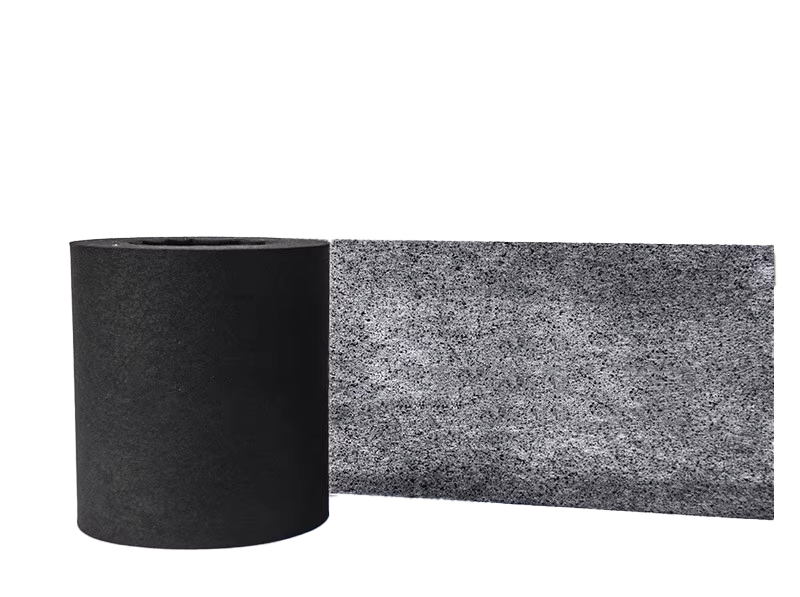
A non woven filter fabric is a sheet or web material designed to help remove or control contaminants from air or liquid flow. It may work as the main filter layer, a support layer, a pre-filter layer, a carrier for functional particles, or part of a multi-layer composite. In air and odor control, different layers often perform different functions.
For particle filtration, the fabric structure helps capture dust, pollen, fibers, smoke particles, or other airborne particles. The performance depends on fiber size, pore structure, thickness, density, electrostatic treatment, and airflow resistance. For odor and gas control, activated carbon becomes important because many odor molecules and VOCs are gases rather than solid particles.
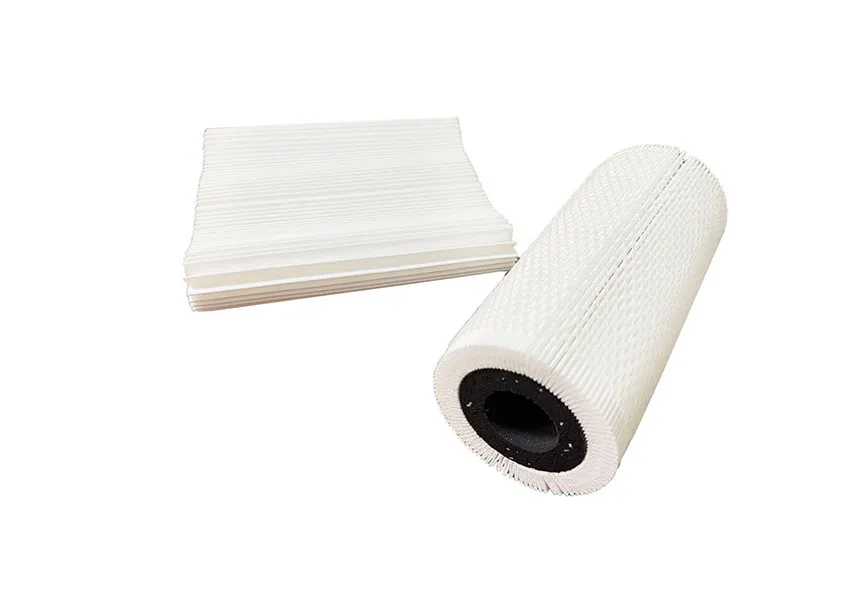
This is why air filtration products often use more than one material. A pre-filter may capture larger dust particles. A fine filtration layer may capture smaller particles. An activated carbon layer may target odors and selected gases. A support layer may improve strength and make the structure easier to pleat, cut, laminate, or install.
In air cleaner design, particle filtration and gas filtration are usually treated as different functions, so some systems combine particulate media with an activated carbon filter designed to remove gases. This distinction is useful for buyers because a fabric that performs well against dust may not perform well against odor, and a carbon layer designed for odor control may still need a particle filter layer to protect it from clogging.
For manufacturers, the value of activated carbon nonwoven fabric is its ability to integrate adsorption media into a flexible roll or sheet format. This makes it easier to cut, laminate, sew, heat seal, pleat, or assemble into finished products.
Nonwoven fabric can filter airborne particles when it is designed with the right structure. Meltblown nonwoven fabric, spunbond nonwoven fabric, needle-punched fabric, composite nonwoven fabric, and activated carbon nonwoven fabric may all be used in filtration, but they do not perform the same function.
A standard nonwoven fabric may capture larger dust or act as a support layer. A fine fiber nonwoven layer may capture smaller particles. An activated carbon nonwoven layer is more relevant when the target includes odors, smoke smell, chemical vapor, formaldehyde, benzene-like compounds, sulfur-containing odors, or other gas-phase contaminants. In many products, activated carbon fabric is not used alone. It is combined with other filtration layers to create a more complete filter structure.
This distinction matters because airborne pollution is not a single category. It may include particles, droplets, aerosols, gases, fumes, and odor molecules. One material cannot always handle every contaminant efficiently. Activated carbon nonwoven fabric can add gas and odor adsorption capacity, while other layers may be needed for particulate capture, dust holding, liquid resistance, or structural strength.
Airflow is another important factor. If the material is too dense, it may restrict air movement and increase pressure drop. If it is too open, contact time between air and carbon may be too short. A balanced structure should allow enough airflow while giving odor molecules and gases enough contact with the activated carbon surface.
For buyers, the question "does non woven fabric filter" should always be followed by "what does it need to filter?" If the target is dust, the specification may focus on particle filtration efficiency and pressure drop. If the target is odor or gas, the focus should shift to carbon content, adsorption performance, contact time, thickness, and the compatibility of the carbon layer with the final filter design.
Some nonwoven fabrics can absorb moisture, but this depends on the fiber type, structure, and treatment. Viscose, pulp-based, cotton-based, or hydrophilic treated nonwovens may absorb water or manage liquid better than polypropylene-based nonwovens. Polypropylene nonwoven is generally hydrophobic unless treated. Therefore, the phrase "does non woven fabric absorb moisture" does not have one universal answer.
Activated carbon nonwoven fabric is mainly used for adsorption of odors and certain gases, not for moisture absorption as its primary function. It may interact with humidity, and high humidity can influence adsorption performance in some applications. For this reason, buyers should define whether the product needs odor adsorption, moisture management, liquid absorption, or a combination of these functions.
For odor control, activated carbon is useful because its porous structure can trap odor molecules on its internal surface. This makes activated carbon nonwoven fabric suitable for deodorizing products such as shoe inserts, refrigerator freshness pads, pet-related products, storage bags, protective mask layers, automotive cabin filters, and air purifier filter components.
In some products, moisture and odor control are both important. For example, a shoe deodorizing insert may need breathability, softness, odor adsorption, and some moisture management. A refrigerator odor absorber may need safe material construction and stable adsorption. A mask or protective layer may need low odor, breathability, skin comfort, and stable carbon integration.
When these functions are required together, a composite structure may be more suitable than a single-layer material. A hydrophilic layer can help manage moisture, a nonwoven support layer can provide strength, and an activated carbon layer can provide odor adsorption. This is where customized nonwoven development becomes valuable.
Nonwoven fabrics are widely used in functional filtration media because they can be engineered for different levels of strength, porosity, thickness, softness, absorbency, breathability, and chemical compatibility. They are not limited to one industry or one product type.
In air purification, activated carbon nonwoven fabric can be used in home and commercial air purifier filters, HVAC filter components, automotive cabin filters, indoor odor-control pads, and smoke or fume reduction media. In these uses, activated carbon helps address odor and selected gases, while other layers may handle particulate filtration.
In personal protection, activated carbon nonwoven materials may be used in protective masks, respirator-related filter layers, gas mask filter media, and industrial protective products. The goal is usually to add odor or gas adsorption capacity while keeping the material breathable and convertible.
In water treatment, activated carbon nonwoven fabric may be used in water purifier filter elements, aquarium filter pads, and liquid filtration products. The fabric format helps hold and distribute the carbon media while allowing water to pass through the structure.
In industrial filtration, it may be used in laboratory fume hood filtration, waste gas treatment systems, chemical processing filtration, odor-control equipment, and dust or fume management systems. These applications often require higher durability, stable carbon loading, controlled pressure drop, and compatibility with the operating environment.
In consumer products, activated carbon nonwoven fabric can be used in deodorizing insoles, refrigerator freshness absorbers, storage pads, pet pads, household odor-control materials, and packaging inserts. These applications require not only adsorption performance but also clean appearance, easy conversion, safe handling, and consistent roll or sheet quality.
For companies comparing huiming non woven fabric, the key advantage is the ability to source nonwoven materials by application category and fabric type, including filtration fabrics, functional fabrics, medical fabrics, and customized material development.
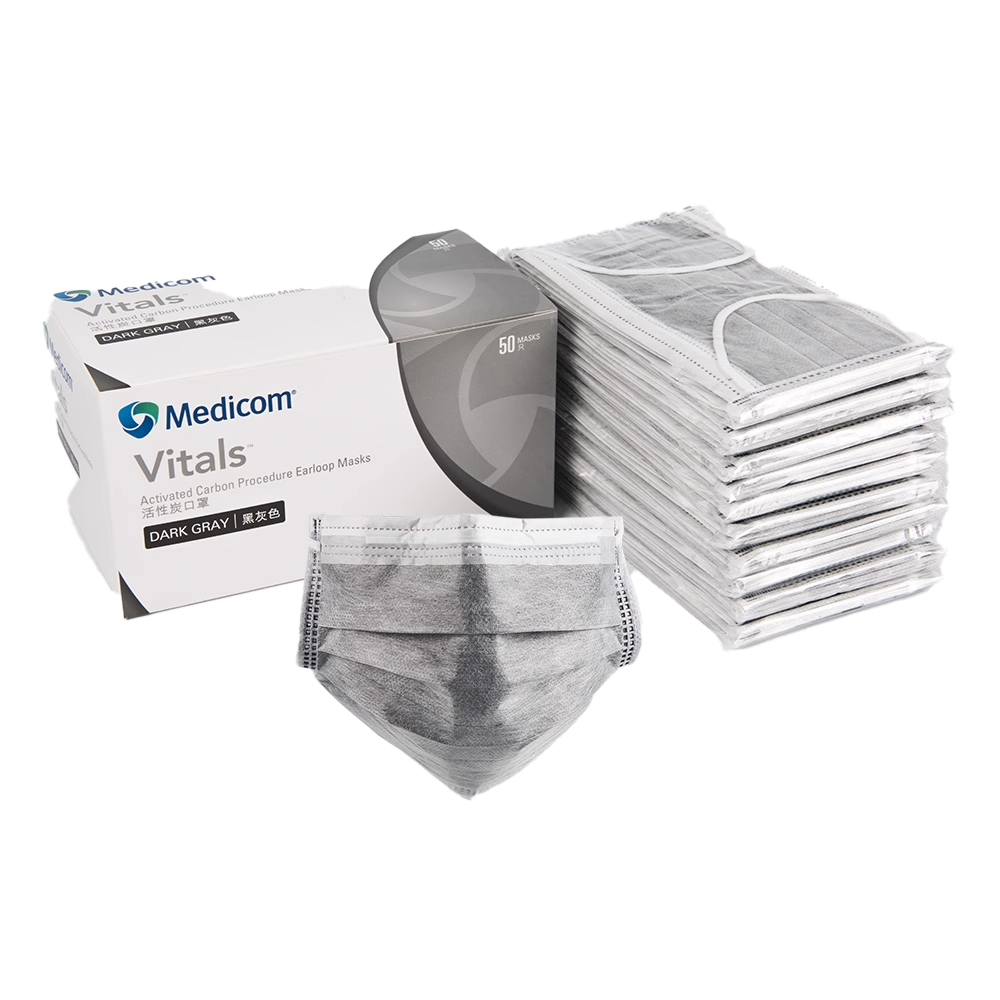
Choosing activated carbon nonwoven fabric should begin with the target problem. Is the product designed to reduce odor, capture gases, support particle filtration, manage moisture, protect users, purify water, or improve consumer product comfort? The application determines the fabric structure.
The first factor is adsorption target. Odor control for shoes is different from formaldehyde reduction in air purification. Industrial exhaust filtration is different from refrigerator freshness products. Buyers should clarify the target contaminants, operating environment, expected service life, and required test method.
The second factor is activated carbon content and distribution. More carbon does not always mean better performance if the material becomes too stiff, dusty, heavy, or airflow-resistant. Uniform carbon distribution helps improve consistency and reduces weak spots in filtration or odor-control performance.
The third factor is airflow or liquid flow resistance. For air filters and masks, excessive resistance can reduce comfort or system efficiency. For water filter pads, the material must allow stable flow without releasing particles or collapsing. The structure must match the final product design.
The fourth factor is GSM, thickness, and strength. Higher GSM may improve durability and adsorption capacity, but it may also affect flexibility and cost. Lower GSM may be easier to convert but may not provide enough carbon loading or mechanical stability. The ideal specification depends on whether the material will be cut, pleated, laminated, welded, sewn, or inserted into a cartridge.
The fifth factor is safety and cleanliness. For personal protection, consumer products, or skin-contact applications, buyers should evaluate odor, shedding, residual chemicals, irritation risk, and material handling. For industrial filtration, chemical resistance and operating conditions may be more important.
The sixth factor is customization. Activated carbon nonwoven fabric can be adjusted by carbon content, base material, GSM, thickness, width, lamination method, and finishing process. Custom design is useful when standard roll goods cannot meet a product's airflow, odor-control, durability, or processing needs.
A practical sourcing checklist includes:
Target application and contaminants
Required adsorption or filtration performance
Carbon loading and distribution
GSM, thickness, and width
Air permeability or liquid permeability
Dusting and carbon shedding control
Strength and flexibility
Compatibility with cutting, lamination, pleating, sewing, welding, or heat sealing
Packaging, storage, and shelf-life requirements
Batch consistency and quality control
For B2B procurement, the best material is not simply the thickest or darkest carbon fabric. The best choice is the grade that matches the final product's filtration goal, conversion process, operating environment, and cost structure.
Activated carbon nonwoven fabric is a practical functional material for air filtration, odor control, gas adsorption, water treatment, personal protection, industrial filtration, and consumer products. It combines the processability and breathability of nonwoven fabric with the adsorption capability of activated carbon, making it suitable for applications where ordinary fabric support is not enough.
For buyers asking "what is a non woven filter fabric" or "where are non woven fabrics used", activated carbon nonwoven fabric is a clear example of how nonwoven materials can move beyond basic coverage into functional performance. It can support particle filtration systems, improve odor-control products, and provide a flexible carrier for adsorption media.
When selecting material, buyers should focus on the final application, target contaminants, activated carbon content, airflow or liquid flow resistance, GSM, strength, cleanliness, and conversion requirements. A well-matched activated carbon nonwoven fabric can improve product performance, reduce development risk, and support more stable long-term production.
https://www.epa.gov/indoor-air-quality-iaq/guide-air-cleaners-home