Composite nonwoven fabric is designed for applications where a single nonwoven layer cannot provide enough strength, filtration efficiency, softness, absorbency, barrier performance, or processing stability. By combining two or more layers, fibers, films, coatings, or functional media, composite nonwovens can deliver a more balanced material structure for filtration, healthcare, hygiene, packaging, automotive, protective, and industrial products.
For B2B buyers, common questions include: what is laminated non woven fabric, what is SMS non woven fabric, what is spunbond non woven fabric, what is spunlace non woven fabric, and how are non-woven fabrics constructed in composite structures? These questions are important because composite materials are not selected only by appearance or GSM. Their performance depends on layer design, fiber type, bonding method, lamination process, airflow, liquid management, strength, softness, and conversion requirements.
A well-designed composite nonwoven can combine the advantages of different materials in one structure. For example, a spunbond layer can provide strength, a meltblown layer can improve filtration, a film layer can add barrier properties, and a soft skin-contact layer can improve comfort. This makes composite nonwoven fabric especially useful in products where performance requirements conflict with each other.
What is laminated non woven fabric: It is a nonwoven material bonded or combined with another layer, such as film, fabric, foam, paper, or functional media, to improve performance.
What is sms non woven fabric: SMS usually refers to a Spunbond-Meltblown-Spunbond structure, where outer spunbond layers provide strength and the middle meltblown layer supports filtration or barrier performance.
What is spunbond non woven fabric: It is a nonwoven fabric made from continuous filaments that are laid into a web and bonded, often valued for strength, stability, and processability.
What is spunlace non woven fabric: It is a nonwoven fabric made by entangling fibers with high-pressure water jets, often used when softness, absorbency, and textile-like feel are important.
How are non-woven fabrics constructed: Nonwoven fabrics are constructed by forming fibers or filaments into a web and bonding them mechanically, thermally, chemically, or through composite processes.
Composite nonwoven fabric is a material made by combining two or more nonwoven layers, functional layers, fibers, films, or treatments into one engineered structure. The purpose is to achieve performance that one single layer cannot provide alone. In technical terms, a nonwoven can be understood as an engineered fibrous assembly, but composite design takes this further by making different layers work together.
A basic nonwoven layer may provide softness, strength, absorbency, breathability, filtration, or coverage. However, many real products need more than one property at the same time. A filter material may need fine particle capture and mechanical strength. A medical fabric may need softness, barrier function, breathability, and low lint. A hygiene material may need liquid transfer, comfort, and backing support. A packaging material may need strength, appearance, and surface stability.
This is where composite non woven fabric becomes valuable. It can combine different layers to create targeted performance. A composite structure may include spunbond nonwoven, meltblown nonwoven, spunlace nonwoven, film, elastic layer, absorbent layer, activated carbon layer, coating, or other functional materials. Depending on the design, it can support breathability, water absorption, antibacterial function, conductivity, waterproofing, flame retardancy, filtration, or cushioning.
For buyers, the important point is that composite nonwoven fabric should be selected according to the product function. The same term may refer to very different materials. One composite fabric may be designed for air filtration, another for medical protection, another for liquid absorption, and another for industrial reinforcement. Therefore, buyers should define the application first and then match the structure to the performance requirement.
Laminated non woven fabric is a type of composite material made by bonding a nonwoven layer with another material. The additional layer may be a film, membrane, foam, paper, foil, fabric, adhesive layer, or another nonwoven. Lamination is often used when the fabric needs improved barrier properties, surface protection, strength, water resistance, printability, or structural stability.
For example, a nonwoven layer may be laminated with a breathable film to create a material that resists liquid while still allowing some vapor transmission. A medical or hygiene product may use a soft nonwoven surface with a film backing to prevent leakage. An industrial product may use laminated nonwoven to improve durability, reduce dusting, or add protective performance.
Laminated nonwoven fabric is not always waterproof. Its performance depends on the film or coating used, bonding method, pore structure, thickness, and test conditions. Some laminated materials are designed for liquid resistance. Others are designed for reinforcement, comfort, appearance, or heat-sealing compatibility.
Common lamination methods include thermal bonding, adhesive lamination, extrusion coating, ultrasonic bonding, and hot-melt lamination. Each method affects the final material differently. Adhesive lamination may provide flexibility, but adhesive selection matters for odor, safety, and heat resistance. Thermal bonding may be clean and efficient, but temperature must match the material. Film lamination may improve barrier performance, but it may reduce softness or breathability if the structure is not optimized.
For procurement, laminated nonwoven fabric should be evaluated by its full structure, not only by the top layer. Buyers should confirm base material, film type, adhesive or bonding method, GSM, thickness, breathability, water resistance, tensile strength, heat-sealing performance, and end-use safety requirements.
SMS non woven fabric usually refers to a three-layer structure: Spunbond-Meltblown-Spunbond. In this structure, the two outer spunbond layers provide strength and protection, while the middle meltblown layer contributes fine fiber filtration or barrier performance.
The reason SMS is widely used is that it combines different strengths in one fabric. Spunbond nonwoven is usually stronger and more stable. Meltblown nonwoven has finer fibers and smaller pores, making it useful for filtration and barrier applications. By placing meltblown material between two spunbond layers, the structure can protect the fine-fiber layer while improving handling and durability.
SMS nonwoven fabric is often used in medical textiles, protective apparel, hygiene products, masks, filtration media, and industrial protective materials. However, not every SMS material has the same performance. The quality depends on layer ratio, fiber diameter, GSM, bonding strength, air permeability, hydrostatic resistance, softness, and any finishing or treatment.
In filtration applications, the middle meltblown layer is especially important. A product that needs higher particle capture may require a carefully engineered meltblown layer or dedicated meltblown filtration media. For medical and protective uses, the final product still needs to be tested as a complete structure because fabric performance alone does not guarantee finished-product performance.
SMS is only one type of composite nonwoven. Other structures may include SMMS, SSMMS, spunbond-film composites, spunlace-film composites, activated carbon composites, elastic composites, or multi-layer absorbent materials. The right structure depends on whether the product needs filtration, liquid resistance, softness, absorbency, strength, or breathability.
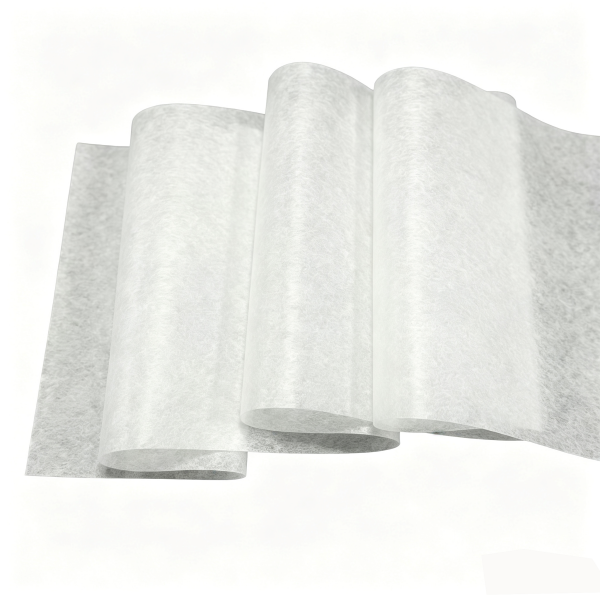
Spunbond and spunlace are two different nonwoven manufacturing approaches, and they create different material properties.
Spunbond nonwoven fabric is made by extruding continuous filaments, laying them into a web, and bonding them through thermal, mechanical, or chemical methods. It is often valued for strength, stability, uniformity, and efficient production. Spunbond is commonly used in hygiene products, medical fabrics, packaging, agriculture, furniture, protective covers, and support layers in composite structures.
Spunlace nonwoven fabric is made by using high-pressure water jets to entangle fibers into a web. It often has a softer, more textile-like feel than many spunbond materials. Spunlace is commonly used in wipes, facial masks, medical pads, cosmetic materials, cleaning cloths, and skin-contact products. It can be made from viscose, polyester, cotton, wood pulp, or fiber blends.
The main difference is not simply softness or strength. Spunbond usually provides better structural stability and process efficiency. Spunlace often provides better hand feel, drape, absorbency, and comfort depending on fiber selection. In a composite nonwoven, these materials may be combined with other layers to balance performance.
For example, a healthcare product may use a soft spunlace layer for skin contact and another layer for absorption or barrier performance. A filtration product may use spunbond as a support layer and meltblown as the functional filtration layer. A packaging material may use spunbond for strength and a film layer for water resistance or printability.
The choice between spunbond and spunlace should start with the final product. If the priority is strength, dimensional stability, and cost-efficient production, spunbond may be more suitable. If the priority is softness, wiping performance, or skin-contact comfort, spunlace may be more suitable. If the product needs both strength and softness, a composite structure may be the better option.
Non-woven fabrics are constructed by forming fibers or filaments into a web and bonding them into a stable sheet. In composite structures, that basic fabric is combined with additional layers or functions. The goal is to assign different jobs to different layers.
A typical composite structure may include a top layer, a functional middle layer, and a backing layer. The top layer may provide softness, comfort, or protection. The middle layer may provide filtration, absorption, elasticity, or barrier performance. The backing layer may provide strength, shape, or leak resistance. In more advanced structures, there may be multiple functional layers.
Composite construction methods include thermal bonding, adhesive bonding, ultrasonic bonding, needle punching, hydroentanglement, lamination, coating, extrusion, and mechanical layering. The chosen method affects softness, strength, breathability, thickness, hand feel, and durability.
Layer compatibility is critical. If two layers do not bond well, delamination may occur during cutting, folding, pleating, sewing, heat sealing, or use. If the bonding method is too aggressive, the fabric may become stiff, lose breathability, or damage the functional layer. If the bond is too weak, the material may separate during production.
Composite nonwovens are often used to solve performance conflicts. For example, a very soft material may not be strong enough alone. A high-filtration material may be too delicate without support. A waterproof layer may reduce breathability unless combined with the right nonwoven and film structure. A medical material may need softness and barrier function at the same time.
For B2B buyers, structure should be discussed early in product development. Key questions include: Which layer contacts the user? Which layer provides filtration? Which layer provides strength? Which layer handles liquid? Which layer must bond with packaging or other components? The answers help define the correct material design.
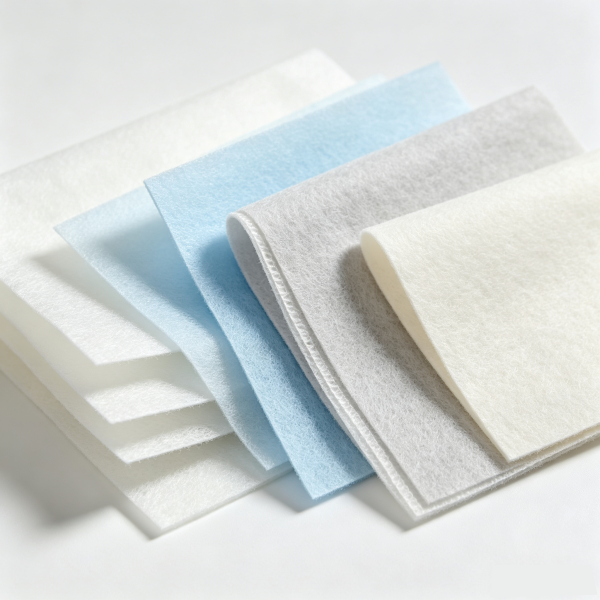
Composite nonwoven fabric is widely used because it can be engineered for different industries and product structures. Its main value is functional combination: one material system can provide support, filtration, barrier performance, softness, absorption, elasticity, or protection.
In filtration, composite nonwovens may be used in air filters, HVAC components, cabin filters, respirator-related materials, liquid filtration, industrial dust filtration, vacuum cleaner filters, and odor-control products. A filter structure may combine a support layer with meltblown or activated carbon media to improve particle capture, airflow, and handling strength.
In healthcare, composite nonwovens may be used in surgical drapes, gowns, wound dressings, absorbent pads, medical wraps, face mask materials, protective covers, and hygiene products. A medical non woven fabric may need to balance softness, breathability, barrier properties, cleanliness, strength, low linting, and compatibility with sterilization or packaging.
In hygiene and beauty care, composite structures may be used in diapers, sanitary products, facial masks, cleansing wipes, absorbent pads, and skincare substrates. A soft surface layer can improve comfort, while an absorbent or distribution layer can manage liquid. A backing layer can add structure or leakage control.
In packaging, laminated or composite nonwovens may be used for protective wrapping, reusable bags, moisture-resistant packaging, product protection, and specialty packaging layers. These materials may need printability, strength, surface stability, or liquid resistance.
In industrial applications, composite nonwovens may be used in automotive interiors, construction materials, insulation, protective covers, polishing materials, battery separators, acoustic materials, cable wrapping, and reinforcement layers. Industrial products often need strength, stability, heat response, chemical compatibility, or abrasion resistance.
Choosing the right composite nonwoven requires more than selecting a product category. Buyers should define the application, required function, layer structure, GSM, air permeability, liquid resistance, strength, softness, thickness, bonding method, and conversion process. A well-matched composite structure can reduce production problems, improve finished product performance, and support more consistent supply.
Composite nonwoven fabric is an important material category for filtration, healthcare, hygiene, packaging, and industrial applications. By combining different layers or functions, it can solve performance challenges that a single nonwoven layer cannot handle alone.
Laminated nonwoven fabric adds layers such as films, coatings, or other substrates to improve barrier, strength, appearance, or processing performance. SMS nonwoven fabric combines spunbond and meltblown layers to balance strength and filtration. Spunbond nonwoven provides stability and processability, while spunlace nonwoven is often selected for softness, absorbency, and skin-contact comfort.
For B2B buyers, the right composite material should be selected by final application. Filtration products may need fine fiber media and support layers. Healthcare products may need softness, cleanliness, and barrier function. Industrial products may need durability and structural stability. By matching fiber type, layer design, bonding method, GSM, and conversion requirements, manufacturers can build more reliable composite nonwoven products.
https://www.edana.org/nw-related-industry/what-are-nonwovens
https://www.cdc.gov/niosh/ppe/respirators/ffr.html